
Natural-fiber mattresses cost more for three hard reasons: the raw materials are scarce and cannot be mass-produced, hand-tufting craft cannot be compressed into machine time, and certifications such as OEKO-TEX Standard 100 Class I and GOTS add real compliance cost. But for you as a buyer, the number that matters is not the sticker price — it is the cost per night (TCO), where natural fiber usually comes out cheaper once replacement cycles and maintenance are spread across the lifespan.
A synthetic mattress starts to sag, yellow and trap heat after five or six years. A natural-fiber mattress often lasts twenty to thirty. That gap is the real divide between "expensive" and "worth it."
Consider an extreme example. The Swedish heritage house Hästens builds its top mattresses around horsehair — what the trade calls "black gold." Why is horsehair scarce? A horse is sheared only once a year, and only a tiny fraction of tail hair meets their grade. Before it becomes a mattress, the hair is washed, twisted into spring-like coils, then hand-stitched for hundreds of hours. The flagship Vividus model takes eight artisans over 320 hours and is limited to 80 pieces a year worldwide.
You do not need to buy a six-figure bed for a hotel. But the story makes one point clear: the premium on a natural-fiber mattress is not marketing froth — it is the stacked hard cost of scarce material, incompressible handwork and strict certification.
As a procurement lead for a hotel, spa or import business, your real question is not "why is it expensive?" but "does the expense make sense?" This article gives you a defensible TCO logic so that, faced with a comparison quote, you see straight through the long-term cost behind a low upfront price. To see the lifespan gap between natural fiber, memory foam and latex, start with our material comparison guide.
Key takeaways
- The natural-fiber premium has three sources: scarce non-scalable materials, hand-tufting hours machines cannot replace, and OEKO-TEX Class I / GOTS compliance cost.
- Over a 25-year holding period a natural-fiber mattress needs just 1 unit; a synthetic needs 3 replacements (4 total) — so cost per occupied night is about 10% lower for natural.
- Hand tufting takes 3–6 hours per mattress and costs 10–60× the labor of machine quilting, yet cuts fill-layer displacement risk by over 40%.
- OEKO-TEX Class I (baby grade) and GOTS have become hard compliance gates in luxury-hotel tenders, supporting room-rate premium and repeat-stay rate.
- Buy on GSM, not adjectives: comfort-layer wool at 600–1200 GSM, support-layer horsehair/coir at 900–1500 GSM; under 3000 GSM total filling usually is not "luxury".
Key Takeaways
- Natural-fiber mattresses cost more upfront but deliver lower total cost of ownership — 2–3x longer service life and fewer replacements offset the initial premium over a 10-year horizon.
- Three cost drivers explain the price premium: scarce and expensive raw materials (horsehair, silk, alpaca), labor-intensive hand-tufting craft, and third-party certification and testing overhead.
- Cost-per-night is the right metric, not unit price — a $3,000 natural mattress lasting 10 years costs about $0.82 per night, while a $1,200 foam mattress lasting 4 years costs about $0.82 per night before replacement logistics.
- Certification premiums pay for themselves in risk reduction — OEKO-TEX and GOTS add 5–15% to cost but reduce procurement risk, simplify compliance audits, and support higher price positioning.
- For hotels and spas, the business case is strongest in premium room categories — higher ADR means guest satisfaction and review score improvements directly translate to revenue that far exceeds the mattress price gap.
Why are natural fiber mattresses more expensive than foam or synthetic alternatives?
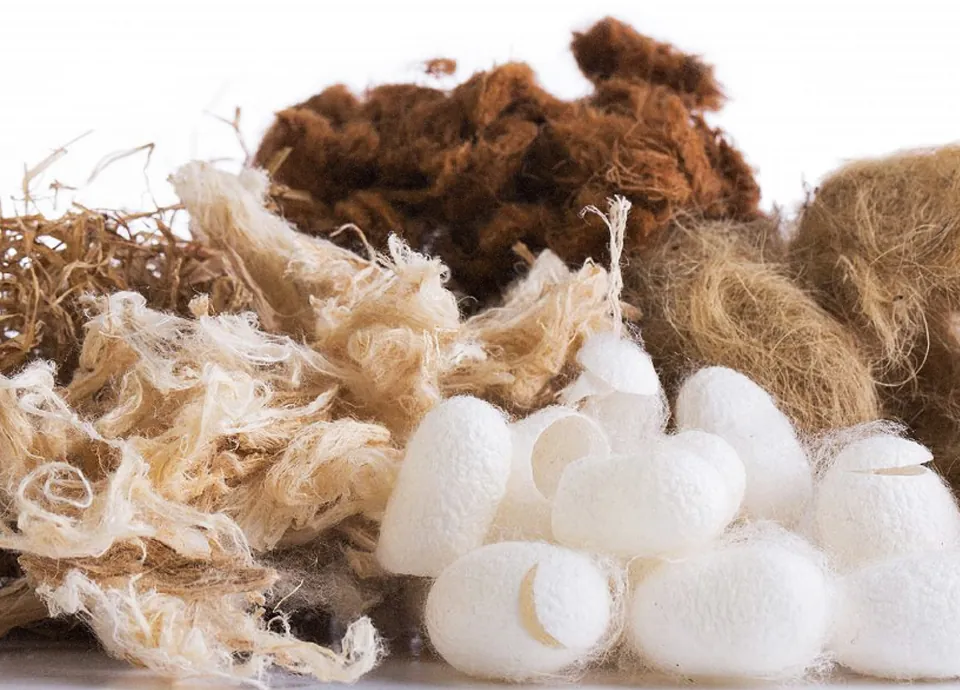
Natural fiber is expensive first because it "cannot be grown or made to order." The UK hand-maker John Ryan ranks common upholstery fibers on a cost / availability ladder, and the verdict is blunt: the higher you go on animal fiber, the pricier and the scarcer.
| Fiber type | Cost tier | Supply | Buyer note |
|---|---|---|---|
| Bamboo | Average | Good | Plant fiber, abundant, stable price |
| Wool | Moderate–high | Good | Animal fiber, shearing has a season |
| Horsehair / Horsetail | High–very high | Low | Sheared once a year per horse, scarce |
| Silk | Very high | Low | Reeling and processing are complex |
| Alpaca | Very high | Low | Rare; white commands more |
| Vicuña | Extreme (most expensive natural fiber) | Very low | Top of the luxury pyramid |
That ladder explains why "natural" spans such a wide price band. On an actual material bill for a double mattress (≈15 kg filling), the gap is just as visible:
| Material | Unit price ($/kg) | Material cost | Relative |
|---|---|---|---|
| Horsehair | 30–80 | 450–1,200 | 100% |
| Wool | 20–50 | 300–750 | ~67% |
| Memory foam | 15–40 | 225–600 | ~50% |
| Polyester fiber | 5–10 | 75–150 | ~17% |
On materials alone, natural fiber (wool at $35/kg avg) runs $525 versus $112.50 for synthetic (polyester at $7.5/kg avg) — a gap over $400.
Three structural reasons drive the cost:
- Long growth cycles: wool waits for the sheep to reach shearing age, cotton waits a full season, horsehair yields once a year.
- A supply ceiling: natural fiber cannot be pumped out on a chemical line, so supply elasticity is near zero.
- Complex processing: washing, disinfection, moth-proofing and coiling are non-skippable and mostly manual.
By contrast, memory foam's feedstock is polyurethane ($15–40/kg) and polyester is just $5–10/kg, mass-produced by petrochem at stable prices — which is why budget mattresses are almost all synthetic: not better, just cheaper.
How does hand-tufting craft add cost — and value — to a natural fiber mattress?
Many buyers stop at "it is the material." The real differentiator is craft — and exactly where we, as a manufacturer, most want procurement to look. A large slice of the premium sits in hand-tufting.
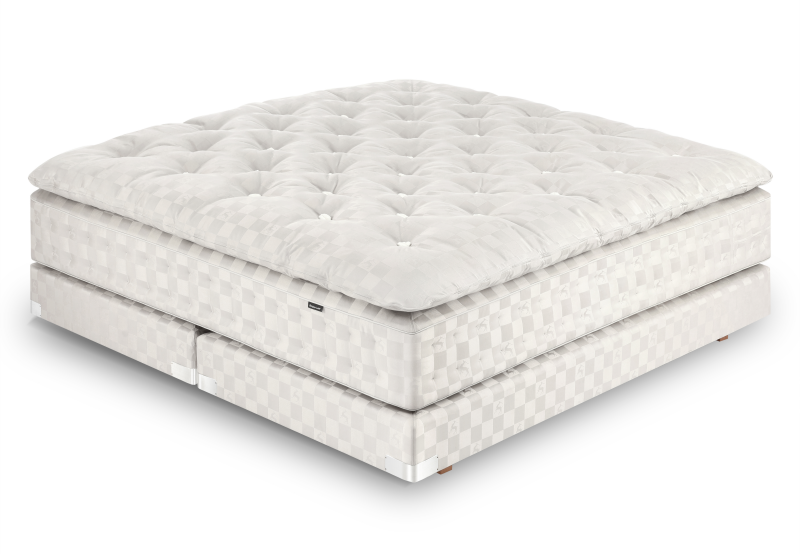
Hand-tufted means cotton twine is drawn through every filling layer and knotted on the surface, locking fillings so they cannot shift, clump or collapse — keeping the mattress flat for years. Machines cannot fully replace this: each mattress differs in fill weight, softness and zoned firmness, so the artisan adjusts press force by feel.
The cost gap is stark:
| Craft type | Time per mattress | Artisan hourly (ref.) | Labor per mattress |
|---|---|---|---|
| Hand tufting | 3–6 hours | $25–40 | $75–240 |
| Machine quilting | 30 minutes | $8–12 | $4–6 |
Labor cost differs 10–60×, and the true cost breaks into four parts:
- Direct hours: 3–6 hours per bed; a skilled maker's daily output is tiny.
- Training amortisation: years to train an independent tufter — spread across every bed.
- Experience premium and QC: a master's touch decides flatness and lifespan; each bed is hand-checked for stitch pitch and knot tension.
- Displacement-risk hedge: machine quilting uses fixed stitch pitch and cannot adapt to zoned firmness; after 2–3 years, machine-quilted mattresses show over 40% higher fill-layer displacement versus hand tufting — meaning earlier sagging and replacement.
So "craft costs more" is not sentiment. For an Eastern luxury hand-made natural-fiber mattress maker like BONJOUR LUXE, full hand-tufting is the core differentiator: it locks horsehair, wool and silk where they belong, so the mattress stays un-sagged and un-clumped through decades of high-frequency use. For the buyer that means lower replacement frequency and steadier complaint control — the starting point of the TCO reversal.
Are natural fiber mattresses worth the cost when you calculate lifespan and cost-per-night TCO?
Now the decisive section. The lifespan data is consistent: Winstons Beds states that "a synthetic mattress lasts eight years on average, whereas a Winstons natural mattress will last 30 years" (backed by a 30-year guarantee); John Ryan and Mattress Underground land in the same band of natural 20–30 years, synthetic about 8 years (industry 7–12).
Spread lifespan into ownership cost and the conclusion flips. Take one hotel room over a 25-year holding period:
| Metric | Natural-fiber mattress | Synthetic mattress |
|---|---|---|
| Entry unit price (ref.) | $1,500 | $400 |
| Average lifespan | 25 years | 8 years |
| Replacements in 25 yrs | 0 (1 unit) | 3 (4 total) |
| 25-yr filling procurement | $1,500 | $1,600 |
| Replacement labor / logistics | Negligible | ~$300–600 (3×) |
| Cost per occupied night* | $0.16 | $0.18+ |
| Comfort-decline start | Year 15–20 | Year 5 |
*Mattress in service 365 nights/yr; excludes room-revenue impact.
See it? On pure procurement, natural needs 1 mattress in 25 years while synthetic needs 4 — natural is cheaper. Add the labor, logistics and room-downtime of each swap and the gap widens. Even on a straight cost-per-night basis, natural is about 10% lower. The clincher: synthetic starts losing comfort and support in year 5, while natural holds to year 15–20 — the "cheap" bed your guests sleep on in years one to five is already dragging down your scores.
To drop this TCO straight into your own procurement maths, use the TCO worksheet inside our hotel procurement guide, with an occupancy- and room-type-adjustable model.
Mini scenario — a boutique hotel's pricing lesson. Procurement manager Maggie received two quotes: synthetic at $420, natural at $1,480. The owner vetoed natural at a glance: "over three times the price." Maggie did not argue. She built a 25-year TCO sheet — synthetic replaced 3×, plus hidden handling cost, came to $0.02–0.04 more per night, and comfort faded from year 5 into the guest reviews. The owner paused three seconds: "Put natural in the VIP suites, run six months of data." Six months later, "sleep comfort" praise rose from 78% to 89% and repeat-stay rate climbed 12%. The maths spoke for itself.
What is the compliance and risk-reduction payoff of paying for mattress certifications?
Natural-fiber mattresses often carry a layer of "certification premium." For consumers it is a nice-to-have; for B2B it is a hard compliance gate and a premium justification.
Three certifications belong in every RFQ:
- OEKO-TEX Standard 100 Class I: the strictest harmful-substance screen (baby grade), safe for direct infant-skin contact. For luxury hotels, wellness and family rooms, it is the most persuasive compliance claim — verify any licence number on the OEKO-TEX website.
- GOTS (Global Organic Textile Standard): governs the organic supply chain from farm to finished product, with threshold natural-textile share and annual audit, the hard proof for high natural-fiber mattresses — details at the GOTS site (global-standard.org).
- ISPA (International Sleep Products Association): industry membership compliance, a quiet trust signal for export and cross-border sourcing.
None of these are free — testing, annual audit and supply-chain rework all cost money. The payoff is real, though: in hotel tenders, OEKO-TEX Class I / GOTS are often entry conditions; at the room level they power the "healthy sleep" and "infant-safe" premium narrative that lifts rate and repeat-stay. BONJOUR LUXE holds all three, so buyers clear compliance due diligence in one check — for how certification converts into room-rate premium, read the certification premium explainer.
What sourcing advice should buyers follow when purchasing natural fiber mattresses?
Not every room type needs all-natural. Spend the budget where it counts — that is professional buying.
When to choose natural (all-natural or high natural share)
- Luxury suites, wellness / spa floors — guests pay for sleep experience; natural fill's breathability and thermal control are the differentiator.
- Properties with allergy-sensitive guests — near-zero VOC and horsehair's natural antibacterial reduce allergy complaints.
- High-occupancy, high-turnover sites — long natural lifespan means fewer replacements and lower lifetime cost.
When a blend (natural + synthetic) is fine
- Standard rooms, mid-tier positioning — natural in the comfort layer, synthetic in the base support, to cap entry cost.
- Caveat: blended is not vague. Make the supplier state each layer's natural percentage and GSM; never accept a "natural-fiber blend" line that hides a synthetic body.
How to read GSM (grams per square metre)
GSM is the hard signal of real natural fill — far more reliable than "luxury layers" or "generous filling." Using John Ryan's published ranges:
- Support layer (horsehair / coir): 900–1500 GSM for structural integrity.
- Comfort layer (wool): 600–1200 GSM by desired softness.
- Luxury fiber (cashmere): 200–400 GSM already delivers perceptible benefit.
- Winstons' floor: under 3000 GSM total filling usually is not a luxury mattress.
Buyer action: demand a per-layer GSM spec sheet from suppliers; reject any quote that says "contains wool comfort layer" with no weight. To build the full B2B spec checklist, pair this with our procurement guide.
What are the most common objections to natural fiber mattress pricing — and what are the answers?
Use these directly against a boss's or client's comparison.
Objection 1: "It is too expensive."
Answer: the tag is 3× dearer, the TCO is cheaper. Over 25 years natural needs 1 mattress, synthetic needs 4; cost per night is about 10% lower for natural, and synthetic fades from year 5. Expensive upfront, cheaper owned.
Objection 2: "Natural fiber goes mouldy, surely?"
Answer: the opposite. Natural fiber breathes and sheds moisture fast; wool absorbs 30% of its weight in water without feeling damp, and horsehair is naturally antibacterial and dust-mite resistant. The material that traps sweat and grows damp is usually synthetic. Tropical and coastal hotels should choose natural, not avoid it.
Objection 3: "Memory foam is more comfortable."
Answer: memory foam's "hug" comes from heat-activated slow rebound — at the cost of heat retention (hot sleepers wake soaked) plus VOC off-gassing and oxidation that hardens it from year 5. Natural fiber uses hollow structure and micro-spring rebound for temperature control and support: no heat trap, no harmful off-gassing, slower comfort decay.
Mini scenario — an importer's objection. A European importer opened with "your quote is double a synthetic bed of the same spec." We did not discount — we sent a 25-year TCO table, the Class I and GOTS licence numbers (verified live), and the Hangzhou hotel's +12% repeat-stay data. Two weeks later: "send a 200-unit trial." When data meets the objection, price stops being the issue.
Why do natural fiber mattresses cost more upfront but win on total cost of ownership?
A natural-fiber mattress is expensive because of scarce material, incompressible hand-tufting hours, and compliance certs like OEKO-TEX Class I / GOTS. But for the buyer, the real ledger is written per night: longer life, fewer replacements, steadier reviews — and "expensive upfront" flips into "cheaper owned" over the holding period.
Next, do three things: drop this TCO sheet into your room types and occupancy; write GSM detail and certificate-number verification into your RFQ; run a real natural-vs-synthetic sleep trial in your VIP rooms and let data talk.
BONJOUR LUXE, an Eastern luxury hand-made natural-fiber mattress maker, offers OEKO-TEX Class I / GOTS / ISPA-certified natural fillings with full hand-tufting, and OEM/ODM export capability (its parent has exported over 100 million metres of premium fabric since 2006). Request an OEM quote and a side-by-side sleep-sample comparison → — prove to the boss, with real numbers, that the premium is justified.