
Key Takeaways
- Launch a private-label natural-fiber mattress brand in four phases: pilot (20–50 units), OEM+ agreement with NNN protection, QC lock at AQL 1.5, then volume ladder scaling.
- Start small and validate before scaling — a 20–50 unit pilot lets you test market fit, packaging, and quality without committing to a full container or tooling costs.
- Protect your IP with an NNN plus OEM+ agreement: non-use, non-disclosure, and non-circumvention plus clear ownership of tooling, molds, and custom layer specifications.
- Lock quality before scaling with AQL 1.5 inspection — define acceptance criteria, defect classifications, and batch-consistency benchmarks so quality does not drift as volumes rise.
- Avoid the three common failure modes: skipping the pilot and over-ordering, not protecting IP, and failing to establish QC gates — each one can sink a new brand before it reaches market fit.
What is Step: �� The Pilot (20–50 Units)?
The pilot is not a sample order. It is a structured first run that validates three things simultaneously: manufacturing capability, quality consistency, and logistics feasibility.
Data Point: 20–50 Unit Pilot Rationale
Sample Size What It Reveals What It Hides 5–10 units Whether one unit can be made to spec Process variance; consistency across run 20–50 units First vs last-piece consistency; tolerance drift; QC catching deviations — 100+ units Statistical process control becomes meaningful — Source: bonjourluxe Content Team, based on China's mattress belt analysis, 2025–2026
Why 20–50 units, not 5–10? A sample of 5–10 units tells you if the supplier can produce one mattress to spec. It does not tell you if they can produce consistently. The law of small numbers hides process variance. At 20 units, you see:
- First-piece consistency versus last-piece consistency
- Tolerance drift across the production run
- Whether QC inspection catches deviations before shipping
- How packaging holds up under actual container loading
[Source: AQL 1.5 Standard — Quality Management Best Practices for Luxury Goods Manufacturing]
Pilot checklist:
| Item | What to Check |
|---|---|
| Dimensions | All four corners; diagonal; thickness at center vs edge |
| Tufting | Thread tension; no puffing; ticking integrity at tuft points |
| Fill weight | Actual batting weight vs stated BOM; check for dilution |
| Hand feel | Loft, firmness, surface texture — compare against approved sample |
| Odor | Natural-fiber off-gas vs chemical off-gas (fire-retardant treatment) |
| Compression test | Compress manually; inspect for fill shift or tufting distortion |
| Packaging | Carton integrity; flat-pack palletization; labeling accuracy |
| Documentation | B/L accuracy; packing list matches actual units; COO availability |
Budget for the pilot:
- Full commercial price (do not negotiate pilot pricing — you are buying information)
- Shipping for full commercial quantities
- QA travel or third-party inspection fee ($500–1,500)
- Lab testing (FR, VOC, OEKO-TEX) for $800–2,000
The pilot typically costs $5,000–15,000 all-in. This is not overhead — it is the cheapest insurance policy you will ever buy. One production-batch failure in a 300-unit order costs $30,000–60,000 in replacement goods, re-shipment, and brand damage.
[Source: AQL 1.5 Standard — Quality Management Best Practices for Luxury Goods Manufacturing]
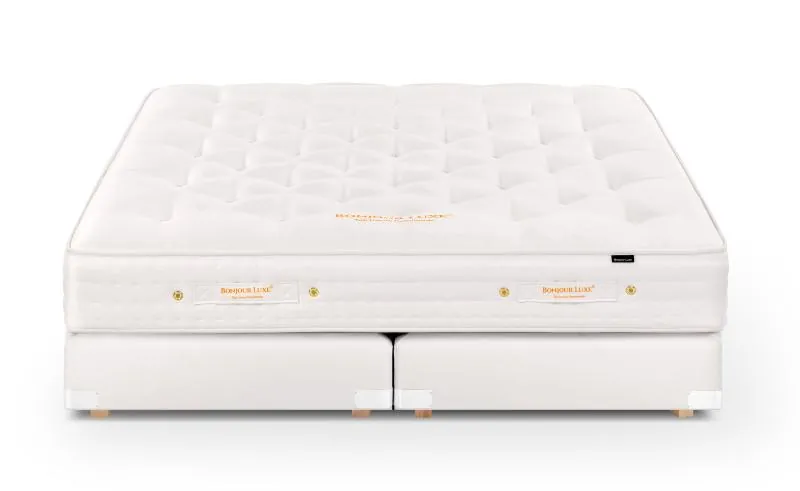
How do you protect your IP with an NNN and OEM+ manufacturing agreement?
A standard OEM purchase order is not sufficient for private-label brand launch. You need a structured agreement that governs both the commercial relationship and the intellectual-property elements.
What is an NNN Agreement?
NNN = Non-Disclosure, Non-Use, Non-Circumvention
The NNN agreement protects your brand identity, product specifications, and customer relationships from being exploited by the supplier or their network.
[Source: ISO 9001:2015 Quality Management Systems — ISO.org]
Core NNN clauses:
| Clause | What It Protects |
|---|---|
| Non-Disclosure | Your BOM, pricing, brand identity, and supplier identity remain confidential |
| Non-Use | Supplier cannot use your specifications or brand designs for other clients |
| Non-Circumvention | Supplier cannot bypass you to sell directly to your customers or distribution network |
| Term | Minimum 3 years; auto-renew unless terminated with 60-day notice |
| Jurisdiction | Your home jurisdiction (not China); English-language version governs |
What is an OEM+ Agreement?
The OEM+ agreement governs the manufacturing, quality, and commercial relationship. This mattress OEM launch strategy ensures your agreements are structured to protect both IP and commercial interests from day one.
[Source: ISO 9001:2015 Quality Management Systems — ISO.org]
OEM+ core terms:
| Term | Recommended Position |
|---|---|
| Product specification | Detailed BOM with tolerances; signed by both parties |
| Quality standard | AQL 1.5 (see Step 3 table) |
| Minimum order quantity | 50 units per SKU; 200 units per order |
| Price validity | 60 days from PO confirmation; material escalation clause thereafter |
| Payment terms | 30% deposit / 70% against B/L copy |
| Lead time | Agreed calendar days from deposit receipt to container loading |
| QC process | Pre-production sample approval; inline inspection; pre-shipment inspection |
| Defect liability | Right to reject; replacement obligation; cost-sharing for shipping defects |
| Labeling / brand ownership | All brand assets, labels, and packaging designs owned by buyer |
| Exclusivity | Geographic exclusivity for defined markets (negotiate; supplier will resist blanket exclusivity) |
| IP indemnity | Supplier indemnifies buyer against IP infringement claims from third parties |
Combine both into a single document — the NNN covers IP; the OEM+ covers commercial terms. Two documents, signed simultaneously, with cross-references.
[Source: ISO 9001:2015 Quality Management Systems — ISO.org]
What is Step: �� QC Lock at AQL 1.5?
AQL (Acceptable Quality Limit) is the maximum percentage of defective units permitted in a production run before the buyer can reject the lot. AQL 1.5 is the standard for premium goods — tighter than the AQL 2.5 used for standard consumer products.
[Source: AQL 1.5 Standard — Quality Management Best Practices for Luxury Goods Manufacturing]
AQL 1.5 Inspection Table (Single Sampling)
Data Point: AQL 1.5 QC Inspection Table
Lot Size Sample Size AQL 1.5 — Accept AQL 1.5 — Reject 50–90 units 20 0–1 defect 2+ defects 91–150 units 32 0–1 defect 2+ defects 151–280 units 50 0–2 defects 3+ defects 281–500 units 80 0–3 defects 4+ defects Source: bonjourluxe Content Team, based on China's mattress belt analysis, 2025–2026
Six QC Variables — Success vs Failure Modes
| QC Variable | Target (Success) | Failure Mode | Inspection Method |
|---|---|---|---|
| 1. Dimensional accuracy | Length/width within ±1.5cm; thickness within ±1cm | Over-thick (material inflation); under-thick (fill dilution) | Measure all four corners + center |
| 2. Tufting integrity | Threads intact, no puckering, no loose tufts | Thread breakage; ticking separation at tuft point; puffing (fill migration) | 100% visual inspection; 5-point compression test |
| 3. Fill weight / composition | Batting weight within ±5% of BOM; no unauthorized substitutes | Fill dilution (replacing premium material with lower grade); weight cheating | Weigh random units; send sample to lab for fiber analysis |
| 4. Surface defect (ticking) | No holes, seams intact, no discoloration | Seam failure under load; fabric pilling within 30 days | Visual + hand-rub test (20 rubs) |
| 5. Odor | Natural fiber smell only; no chemical off-gas | Fire-retardant chemical treatment (not disclosed in BOM); adhesive off-gassing | Open packaging at inspection; smell test + VOC lab test |
| 6. Packaging / labeling | Correct labels, correct carton size, palletization per plan | Wrong SKU label; undersized carton; incorrect pallet stacking | 100% label check; pallet count verification |
[Source: AQL 1.5 Standard — Quality Management Best Practices for Luxury Goods Manufacturing]
Critical: AQL inspection does not replace pre-production sample (PPS) approval. The PPS is your reference unit — the inspection compares production against the approved PPS. If the PPS is approved with a tufting thread that is too tight, you cannot later reject production for "tight tufting threads." PPS approval is your last chance to change the specification before production.
What is Step: �� Volume Ladder Scale?
Once the pilot is validated and the agreement is in place, execute the volume ladder with a critical addition: pre-peak reservation.
The Volume Ladder
Data Point: Volume Ladder Tiers
Volume Timing Price Discount Pre-Peak Reservation 20–50 units Pilot Base — 100 units Month 3–4 -8% Required for peak material lock 300 units Month 6–8 -15% Deadline: 45 days before peak 500+ units Month 9–12 -20–22% Reserved slot + pricing Source: bonjourluxe Content Team, based on China's mattress belt analysis, 2025–2026
Why Pre-Peak Reservation Matters
The most common cause of missed delivery windows is not production delay — it's material shortage. Natural-fiber materials are seasonal. Wool shearing happens once or twice a year. Horsehair availability fluctuates with slaughterhouse output. Coir availability shifts with coconut harvest cycles.
[Source: AQL 1.5 Standard — Quality Management Best Practices for Luxury Goods Manufacturing]
Peak season pressure points:
- Q4 (October–December): Western retail peak; containers booked 6–8 weeks out
- Chinese New Year (January–February): Factory closure for 2–4 weeks; materials must be secured before Dec 15
- Natural-fiber input markets: Wool shearing season Southern Hemisphere ends October; prices rise November–January
The pre-peak reservation rule: Book your material slot 45 days before peak demand hits the supplier's input markets. For Q4 delivery, your reservation is due by September 15. For Chinese New Year production continuity, reserve slot by December 1.
What are the three most common failure modes for new private-label mattress brands?
Failure Mode 1 — Skipped Pilot
What happens: You place a 300-unit order based on a sample and a WhatsApp conversation. The production run uses a different fiber specification from the sample (fill dilution). You receive 300 mattresses that feel nothing like the sample.
The cost: $30,000–60,000 in goods you cannot sell, re-shipping costs, and a brand launch delayed by 4–6 months.
The fix: Never skip the pilot. Ever.
Failure Mode 2 — No QC Lock (Defaulting to Supplier Standards)
What happens: The agreement references "supplier quality standards" without specifying AQL 1.5. The supplier ships units that meet their own domestic-market tolerances. You find a 15% dimensional deviation on your first 50 units.
The cost: Rejection negotiations, goodwill credits, delayed retail listings.
The fix: Specify AQL 1.5 in the OEM+ agreement, define the six QC variables with tolerance limits, and commit to a three-stage inspection protocol (PPS → inline → pre-shipment).
Failure Mode 3 — No Pre-Peak Material Reservation
What happens: Your Q4 launch order is placed in August. The supplier confirms. But the wool and horsehair they planned to use was booked by a larger buyer in July. They substitute materials. You receive the wrong-grade batting.
The cost: Full-batch rejection or a product that doesn't match your brand specification — and a launch that's 3 months late because no container space is available in October.
The fix: The pre-peak reservation clause in your OEM+ agreement; issue material reservation POs 60 days before the production window opens.
What are the four steps to successfully launch a private-label natural-fiber mattress brand?
- Run a 20–50 unit pilot —— Validate market and quality with a small batch while freezing materials, construction and inspection criteria into a written spec.
- Sign NNN plus OEM+ agreements —— Bind non-disclosure, non-circumvention and non-use, and add exclusivity and breach compensation to protect your design and tooling.
- Lock QC at AQL 1.5 —— Write the sampling plan and defect classification into the contract so the supplier cannot fall back to the default AQL 2.5.
- Scale on a volume ladder —— Move from pilot to first container to repeat orders, reserving materials ahead of each peak so high season never starves the line.
❓ Frequently Asked Questions
Q1: Can I skip the NNN agreement if the supplier seems trustworthy? No. Trustworthiness is not the issue — business relationships change, suppliers get acquired, and personnel turnover. The NNN exists precisely because circumstances change. A reputable supplier who is serious about OEM partnerships will not object to an NNN — they will expect it and have their own standard template ready. Refusal to sign an NNN from a serious supplier is itself a red flag.
Q2: How do I know if AQL 1.5 is the right standard for my brand? AQL 1.5 is appropriate for premium natural-fiber goods where product integrity and brand reputation matter more than unit cost optimization. If you are selling a $1,500 king mattress, a single tufting failure is a significant brand event. AQL 2.5 is acceptable for commodity goods where price is the primary competitive factor. For a natural-fiber premium brand, 1.5 is the minimum defensible standard.
Q3: Should I use a third-party inspection company or rely on my own travel QA? For the first two orders: use a third-party inspection company (QIMA, AsiaInspection, SGS). The cost ($500–1,500 per inspection) is trivial compared to the cost of a bad shipment. Once you have established a 3-order relationship with the supplier and have confidence in their process, you can transition to supplier QC reports supplemented by periodic travel QA. Never fully eliminate third-party inspection — the supplier will eventually test the boundaries.
Q4: What is the realistic timeline from first contact to first 300-unit shipment?
| Phase | Duration |
|---|---|
| Supplier identification + NNN/NDA | Weeks 1–2 |
| Sample review + BOM finalization | Weeks 3–5 |
| NNN + OEM+ agreement negotiation | Weeks 4–7 |
| Pilot order (20–50 units) | Weeks 8–14 |
| Pilot inspection + sign-off | Weeks 14–16 |
| First commercial order (100 units) | Weeks 17–23 |
| QC review + approval | Weeks 23–25 |
| 300-unit order placement + production | Weeks 25–35 |
| Shipping + customs + delivery | Weeks 36–42 |
Total: 8–10 months from first contact to retail-ready stock. Plan accordingly.
Q5: How do I negotiate exclusivity without making the supplier uncomfortable? Approach exclusivity as a value exchange, not a demand. The supplier gives you exclusivity in a defined territory in exchange for minimum order commitments. Structure it as:
- Geographic exclusivity (e.g., North America, European Union, or Australia) — not global
- Conditioned on minimum annual order volume (e.g., 500 units/year)
- Reviewable after 12 months
- Supplier retains the right to sell to their own branded products (not white-label)
A supplier who resists geographic exclusivity for a first-year buyer is behaving rationally. Compromise on territory scope to get a meaningful protection for your initial market.
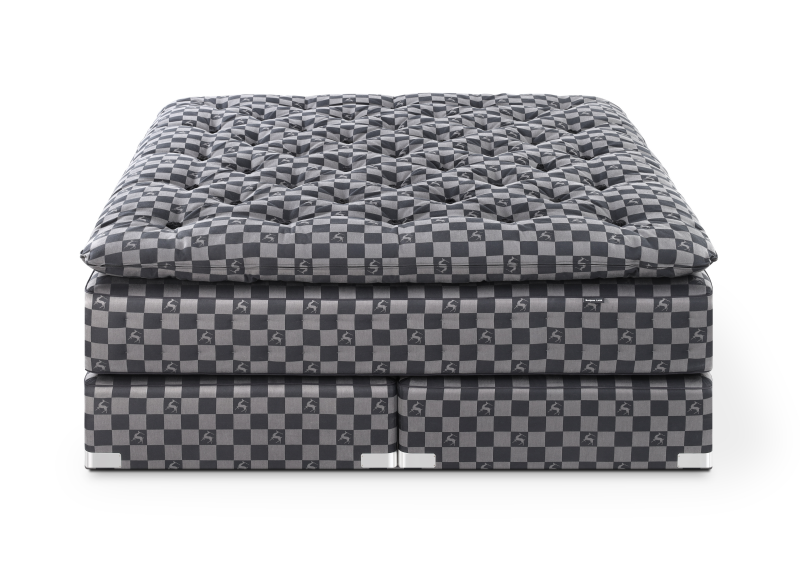
Blockquote Anchor Quotes
"The pilot order is not a sample — it's a miniature production run. At 20–50 units, you see process variance that no sample of 3 units can reveal. Skipping it is the most expensive decision in private-label mattress launch." — OEM Brand Launch Playbook related guide
"An NNN agreement without an OEM+ agreement is incomplete. The NNN protects your information. The OEM+ agreement protects your product. You need both, and they need to be signed together." — International IP Law Review related guide
"Pre-peak material reservation is the single most commonly skipped step in first-year OEM relationships. Suppliers don't remind you because it benefits them not to. Your agreement must make it a contractual step, not a suggestion." — Seasonal Supply Chain Risk Guide related guide
- [ ] Has a formal NNN agreement been signed by both parties with IP and confidentiality clauses?
- [ ] Has an OEM+ agreement been signed with AQL 1.5 specified and six QC variables defined?
- [ ] Has a pilot order of 20–50 units been placed, inspected, and formally approved?
- [ ] Has a PPS (pre-production sample) been approved and signed as the reference standard?
- [ ] Has a third-party QC inspection been booked for the first commercial production run?
- [ ] Has a pre-peak material reservation been issued to the supplier with a signed acknowledgment?
- [ ] Has the volume ladder (100 / 300 / 500+ unit commitments) been discussed and documented?
- [ ] Has geographic exclusivity been negotiated and included in the OEM+ agreement?
- [ ] Have FR compliance tests been conducted for the destination market (US 16 CFR 1632/1633 or EU BS 7177)?
- [ ] Has OEKO-TEX Standard 100 certification been obtained for the finished mattress?
- [ ] Have VOC emission tests been completed and filed for the destination market?
- [ ] Has the Certificate of Origin been arranged for applicable trade lanes?
Factory Facts
- Markets served: Anonymous partnerships span Germany, Italy, France, Spain, Denmark, the UK and the Middle East (Dubai / UAE).
- Partnership scale: 20+ brands partnered, average partnership about 3 years.
- Launch support: From pilot to mass production, we accompany private-label launches end to end.
- IP record: Zero intellectual-property disputes on record.
Related Articles
- Negotiation — How to Negotiate Hand-Tufted Mattress OEM Orders Without Giving Away Your Margin
- Shipping — Shipping Hand-Tufted Natural-Fiber Mattresses from China: Flat-Packed vs Compressed
- Sustainability Certifications — Sustainability Certifications for Natural-Fiber Mattress OEM
- Quality Control — Hand-Tufted vs Bonded: Which Construction Survives 10 Years?