Key Takeaways
- The global handcrafted mattress market reached approximately $8.2 billion in 2026, with natural-fill and hand-tufted segments growing faster than the overall mattress industry, driven by wellness and sustainability trends.
- Five structural trends are reshaping the industry: premiumization of sleep, demand for natural and chemical-free materials, growth of direct-to-consumer and private-label brands, China as a quality OEM hub, and rising certification requirements globally.
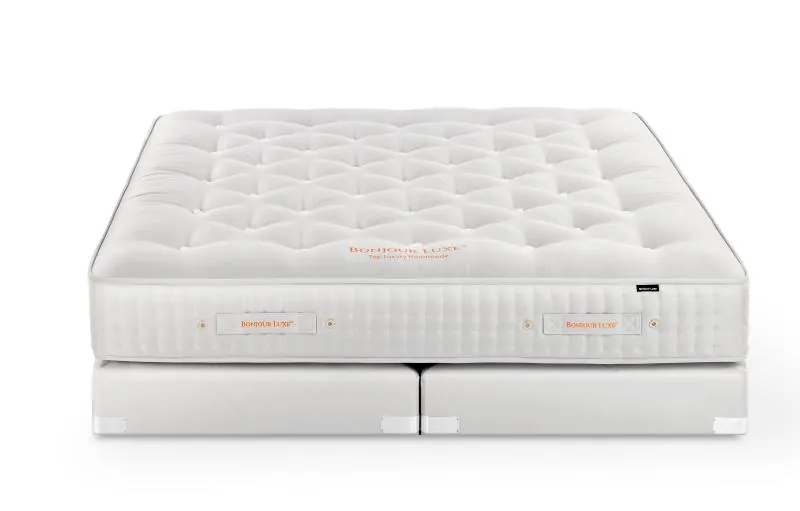
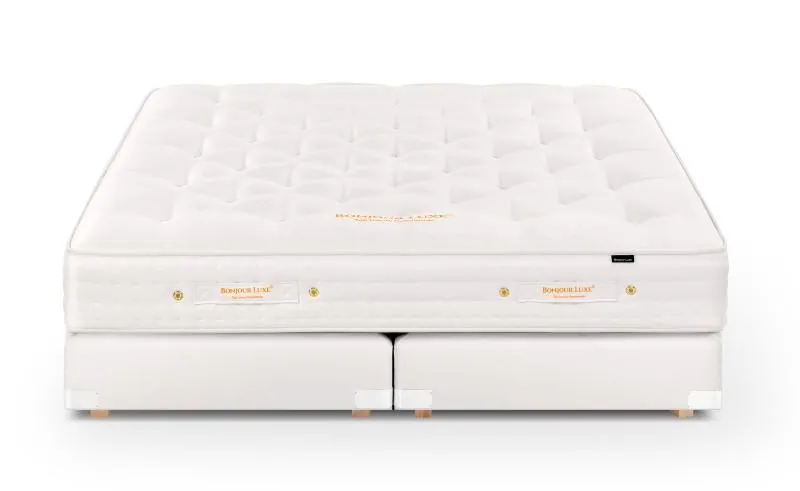
- Chinese hand-tufted OEM delivers the same craft as European heritage at 40–60% lower FOB price, with OEKO-TEX Class I certification and BOM flexibility most European houses cannot match.
- Natural fill material costs (FOB China, Q2 2026): horsehair is the premium fill, followed by silk and alpaca, with wool and cotton as more accessible natural layers — material choice drives 30–50% of unit cost variance.
- Eight red flags should end an evaluation immediately: no verifiable certifications, refusal of factory visits, vague material specs, no QC documentation, unrealistic lead times, hidden fees, IP red flags, and inconsistent sample quality.
How big is the global handcrafted mattress market in 2026, and what is driving growth?
The global handcrafted mattress market reached an estimated $8.2 billion in 2026, growing at a 7.8% CAGR — faster than the mattress industry as a whole. This report consolidates Bonjour Luxe procurement data with ISPA trade statistics, USITC tariff schedules and certification-body documentation into a single reference for B2B buyers: hotel groups, specialty retailers, private-label brands and marine outfitters evaluating handmade natural-fiber mattresses.
Key findings at a glance:
- Premium Mongolian horsehair runs $30–80/kg and lasts 20–30 years, while CertiPUR-US memory foam costs $15–40/kg and degrades in 7–12 years.
- Hand-tufted mattresses show fill-migration complaint rates of 0.3–0.8%, versus 3.1–6.7% for machine-assembled products — a 4–8× structural consistency advantage.
- A $1,200 FOB Chinese handcrafted Queen mattress lands in the United States at $1,784–$1,907, even after the 25% Section 301 tariff.
- GOTS 7.0, effective January 2025, expires its grace period for V6.0 factories in December 2026 — any OEM still claiming GOTS 6.0 is behind schedule or misrepresenting status.
- Private-label and custom orders grow 12–15% annually, outpacing the 7.8% market CAGR.
What five structural trends are reshaping the handmade mattress industry through 2030?
Five forces are reshaping the handcrafted mattress market through the end of the decade:
- Supply-chain diversification: global brands now qualify Chinese OEM factories as strategic alternatives — not replacements — for European heritage production.
- Natural-fiber supply constraints: premium Mongolian horsehair prices are expected to rise 8–12% annually through 2028 as demand grows.
- Fire-compliance convergence: 16 CFR 1633-equivalent open-flame standards are becoming the de facto global requirement for international commercial buyers.
- Private label outpacing OEM: custom orders grow 12–15% annually versus the 7.8% market CAGR.
- The supermarine niche: the superyacht fleet grows 4.2% annually, a $120–180M marine handcrafted mattress opportunity with premium pricing.
What are the natural fill material cost benchmarks for handcrafted mattresses (FOB China, Q2 2026)?
Material selection drives both unit cost and product lifespan. The table below benchmarks nine fill materials on FOB China pricing, typical application, service life and moisture management. Note the relationship between price and longevity: premium natural fibers cost more per kilogram but deliver two to four times the service life of synthetic alternatives.
| Material | FOB Price ($/kg) | Typical Use | Lifespan (years) | Moisture Management |
|---|---|---|---|---|
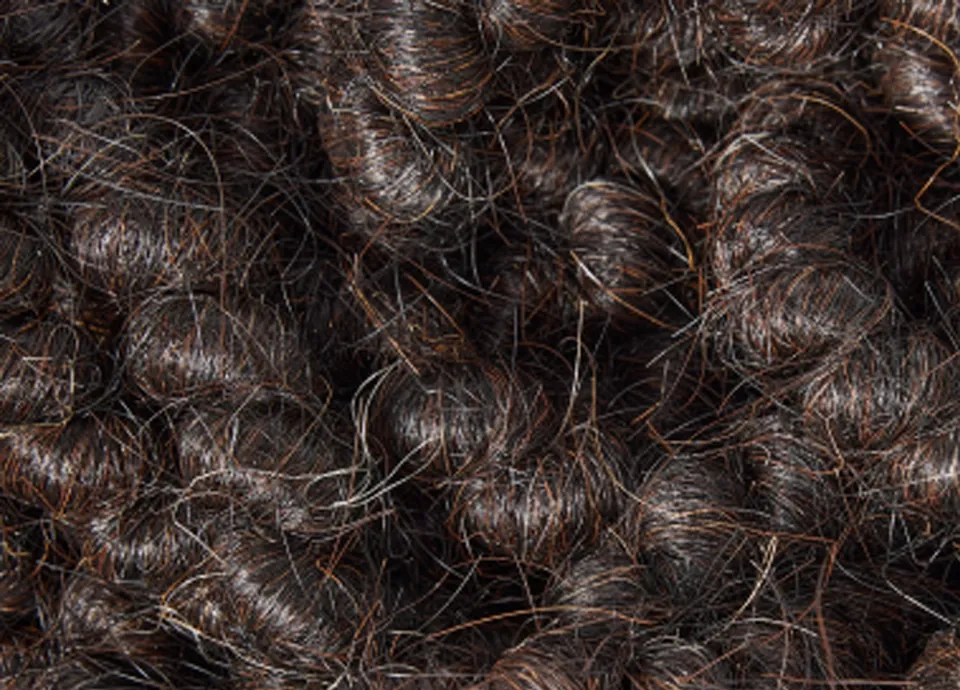
| Mongolian Horsehair (premium, hollow-fiber) | $30–80 | Core structural fill, ventilation layer | 20–30 | Passive capillary drainage |
| Australian Merino Wool | $20–50 | Moisture management, comfort layer | 15–25 | Absorbs 30% of own weight in moisture |
| Mulberry Silk (long-fiber grade) | $50–150 | Sleep-surface thermal regulation | 20–30 | Low moisture retention |
| Camel Hair | $40–100 | Luxury comfort layer, warmth retention | 18–25 | Moderate absorption |
| Alpaca Fiber | $45–120 | Hypoallergenic comfort layer | 15–22 | Lanolin-free, hypoallergenic |
| Organic Cotton (GOTS-certified) | $8–18 | Cover fabric, base layer | 10–15 | Low retention |
| Natural Latex (Dunlop process) | $18–35 | Comfort layer, pressure relief | 12–18 | Open-cell structure |
| Memory Foam (CertiPUR-US) | $15–40 | Budget comfort layer | 7–12 | Traps moisture; retains heat |
| Polyester Fiber (standard) | $5–10 | Economy fill | 5–8 | Minimal management |
Breathability follows the same hierarchy: hollow-core horsehair scores a 9.2 breathability index with passive capillary drainage, Merino wool 8.5 with moisture absorption up to 30% of its own weight, while memory foam (3.0) and polyester (2.5) trap heat and moisture — the root cause of the premature sagging and odour complaints that drive hotel replacement cycles.
Why does hand-tufting craft still command a premium, and what is its economic value?
Hand-tufting is the defining process separating genuine handcrafted mattresses from machine-assembled products claiming the label. A skilled technician passes waxed cotton thread through all fill layers with a long needle, creating tufted rosettes every 4–6 inches that lock the fill in place. The measurable differences:
- Production time: 3–6 hours per unit for hand-tufting versus 25–35 minutes for machine tufting.
- Fill migration complaints: 0.3–0.8% for hand-tufted versus 3.1–6.7% for machine-assembled.
- Structural consistency: a 4–8× improvement maintained across a 20–30 year product lifespan.
Fill migration — the clumping and shifting of comfort layers — is the failure mode that causes uneven comfort and premature sagging in non-tufted mattresses. It is the single most common warranty driver in commercial deployments, which is why hospitality specifications increasingly mandate genuine hand-tufting.
How do OEKO-TEX, GOTS 7.0, CertiPUR-US and GREENGUARD Gold compare for mattress certifications?
Four certifications dominate mattress procurement specifications. They are not interchangeable: each covers a different scope, cost structure and failure mode. The most common procurement error we see is treating CertiPUR-US as a substitute for 16 CFR 1633 fire testing — it is not. CertiPUR-US certifies the foam supplier's material; 16 CFR 1633 tests the finished mattress assembly in open-flame conditions.
| Certification | Issuing Body | Annual Cost (USD) | Scope | Key Limitation |
|---|---|---|---|---|
| OEKO-TEX® Standard 100 | OEKO-TEX Association | $300–$2,000 | Every textile component from raw fiber to finished cover | Certificate is factory-specific; verify scope covers all production lines |
| GOTS 7.0 | Global Standard gGmbH | $3,000–$15,000 | Organic fiber ≥95% (Tier 1) or ≥70% (Tier 2); full processing chain | V7.0 effective Jan 2025; grace period expires Dec 2026 for V6.0 factories |
| CertiPUR-US | CertiPUR-US Program | $1,000–$3,000 | Foam components ONLY — not mattress assembly | Covers foam, not finished mattress — does not replace 16 CFR 1633 testing |
| GREENGUARD Gold | UL Environment | $2,000–$5,000 | Total VOC emissions for furniture and building materials | Primarily relevant for U.S. hospitality, healthcare and education |
GOTS 7.0 vs 6.0, and Class I vs Class II
GOTS 7.0 introduced three material changes over 6.0: expanded synthetic-fiber prohibition across all textile inputs, mandatory annual social-compliance audits of processing facilities, and a prohibited-chemical list expanded by 240 substances. Certification takes 6–18 months from application depending on factory readiness; OEKO-TEX Class I is faster at 8–16 weeks for factories with existing quality systems.
On OEKO-TEX classes: Class I is the infant-grade standard (≤16 mg/kg formaldehyde, zero azo dyes, pH 4.0–7.5) versus Class II for skin-contact articles (≤75 mg/kg formaldehyde). Class I is not legally required for hotels, but it is the de facto specification in 78% of international 5-star hotel standards reviewed in 2025–2026 — it reduces liability exposure and qualifies products for LEED, Green Key and EarthCheck eco-tourism certifications.
How to Verify Any Factory's Certification Claims
- OEKO-TEX: search the certificate number at oeko-tex.com — every genuine certificate is publicly searchable.
- GOTS: search company name or certificate number in the certified-operators database at global-standard.org.
- ISPA membership: check the directory at ispa.org.
- 16 CFR 1633: request the actual CPSC-accepted laboratory test report (UL, SGS, Bureau Veritas) — not a compliance letter.
If a factory cannot provide verifiable certificate numbers or test reports, the claims are fraudulent. This single verification habit eliminates the majority of sourcing fraud cases we review.
How do Hästens, Vi-Spring and Chinese OEM brands compare on craft, materials and price?
The heritage question every buyer asks: can Chinese factories match European brands? At equivalent material specifications, the honest answer is yes for construction and material quality — top-tier Chinese OEM factories use the same Mongolian horsehair grades, Australian Merino wool and Mulberry silk as Hästens and Vi-Spring. The residual gap is in specific artisanal finishing techniques tied to generational expertise. The commercial consequence: material-equivalent products at 40–60% lower cost.
| Brand / Factory | Queen FOB Price | Monthly Capacity | Lead Time | OEKO-TEX Class I | GOTS 7.0 | 16 CFR 1633 | IMO MED |
|---|---|---|---|---|---|---|---|
| Hästens (Sweden) | Retail only ($4,500–$22,000+) | ~60–80K/year | 8–16 weeks | Yes | Yes | No | No |
| Vi-Spring (UK) | Retail only ($4,000–$18,000+) | Limited | 8–20 weeks | Yes | Yes | No | No |
| Bonjour Luxe (China, top tier) | $800–$2,000 | 1,500–3,000 | 35–50 days | Yes | Yes | Yes | Yes |
| Mid-tier Chinese factory | $400–$900 | 300–800 | 40–60 days | No | No | Yes | No |
Note that European heritage houses do not publish FOB pricing because they sell through retail channels only — an 8–20 week lead time on retail orders is standard. For B2B buyers, the Chinese OEM column is the only one directly accessible, and the certification column is the differentiator between top-tier and mid-tier: Class I, GOTS 7.0 and IMO MED cluster in a small group of factories.
How does the landed cost of Chinese vs European handcrafted mattresses compare in the US market?
Tariff analysis should be done on landed cost, not FOB. The full cost stack for a $1,200 FOB Queen-size handcrafted natural mattress shipped to the United States:
| Cost Component | Amount (USD) | Notes |
|---|---|---|
| FOB Price | $1,200 | Queen-size handcrafted natural mattress |
| Ocean Freight (20ft container, Shanghai → LA/LB) | $180–$240 | Subject to market conditions; LCL available |
| Marine Insurance | $4–$7 | Typically 0.3–0.5% of cargo value |
| Section 301 Tariff (25% on Chinese mattresses) | $300 | HTS 9404.29; 25% additional duty as of 2026 |
| Customs Brokerage + Import Duty | $50–$80 | HTS 9404.29 duty rate plus brokerage fee |
| Port Handling + Drayage | $50–$80 | LA/Long Beach terminal fees + local delivery |
| Total Landed Cost | $1,784–$1,907 | Before domestic logistics to final destination |
A comparable European-made mattress at $3,500 FOB lands at $4,200–$4,600 in the United States. Even after the Section 301 tariff, the Chinese OEM landed-cost advantage holds at approximately 58–65% lower — the tariff narrows the gap but does not close it.
What is the 4-phase framework for evaluating a Chinese handcrafted mattress OEM partner?
The framework below compresses a complete supplier qualification into roughly nine months and $15,000 of evaluation spend — trivially small against a $573,000 private-label launch. Each phase has hard pass/fail gates.
- Phase 1: Pre-Visit Qualification (Week 1–2): Verify the factory's unified social credit code on gsxt.gov.cn and confirm 'bedding manufacturing' in the business scope — not 'trade' or 'import/export agency'. Request current OEKO-TEX and GOTS certificates and verify each on the issuing body's public database. Request a tufting process video — not still photos. Minimum viable evaluation team: 3 people including at least one Mandarin speaker. Eliminate any factory that cannot provide verifiable certification numbers within 48 hours.
- Phase 2: Virtual or Physical Audit (Week 3–6): Inspect the raw-materials warehouse — fiber labelling, origin documentation (Mongolian horsehair, wool origin certificates), storage conditions (dry and ventilated; mould is disqualifying). Walk the production line unescorted for at least 15 minutes: tufting stations, coil insertion, border stitching. Request the last 30 days of QC records — defect rates, corrective-action logs, RMA data. Require a minimum of 2 references from current export clients. A factory with fewer than 10 skilled tufting technicians is likely using machine processes for most production.
- Phase 3: Sample Evaluation (Week 7–12): Order 2–3 sample mattresses with your full custom specifications — identical to planned production. Conduct independent ILD testing: target ±5 ILD tolerance for luxury commercial mattresses versus ±10 for consumer products. Arrange destination-market fire testing: 16 CFR 1633 for the U.S., BS 7177 Medium Hazard for the UK, IMO FTP Code for marine. Evaluate seam quality, tufting consistency under compression, and packaging robustness for international shipping. Reject any sample with visible fill migration, uneven stitching or non-standard edge construction.
- Phase 4: Pilot Order and Scale-Up (Month 4–9): Place a 20–50 unit pilot order with the production specification confirmed in Phase 3. Conduct pre-shipment inspection via a third-party QC company (QIMA, Bureau Veritas or SGS): budget 0.5–1.5% of order value. Establish QC checkpoints at incoming material inspection, in-process tufting audit, pre-shipment visual inspection and packaging verification. Define defect acceptance thresholds in writing — typically ≤2% for luxury grade. Negotiate 30% deposit / 70% balance terms and include lead-time penalty clauses for delays exceeding 10% of the committed delivery date.
What are the economics of launching a private-label natural mattress brand — MOQ, investment and breakeven?
For a 500-unit private-label launch: OEM unit cost of $1,100 average (Queen, handcrafted natural) equals $550,000, plus $8,000 custom branding and packaging and $15,000 certification and compliance testing — a total initial investment of $573,000. At $2,499 retail (56% gross margin), breakeven requires 501 unit sales; at $3,499 (68% margin), 267 units. Brands with established distribution reach breakeven in 5–10 months at 40–50 units/month.
On minimum order quantities: genuine hand-tufting factories typically require 20–50 units for custom specifications (custom fill formulation, proprietary fabric, custom tufting pattern) and 10–20 units for standard-specification private label. Volume pricing breaks begin at 100+ units per specification. A factory demanding MOQs above 100 units for custom work is likely running machine production marketed as handcrafted — walk away.
How do replacement cycles and guest complaint economics affect hotel mattress ROI?
Replacement frequency is where natural-fiber economics compound. Handcrafted natural-fiber mattresses last 12–15 years in commercial hospitality environments versus 5–8 years for machine-assembled pocket-coil/memory-foam hybrids. Boutique luxury hotels that switched from memory foam to handcrafted natural mattresses report a 68% reduction in sleep-related guest complaints and replacement cycles extending from 6 to 14 years — eliminating 57 full room-days of operational disruption per property over a 30-year period. The full payback on the unit-price premium averages 22 months.
What niche applications are driving growth for handcrafted natural mattresses?
Healthcare and senior-living operators gain two specific advantages from natural fiber: moisture management (wool absorbs up to 30% of its own weight without feeling damp; horsehair's hollow-core fibers actively ventilate) and a negligible VOC profile versus synthetic foam. Operators switching from synthetic to natural fiber report 45–55% fewer early replacements due to odour and moisture-related degradation — savings that offset the 2–3× unit price premium.
The marine niche runs on the IMO FTP Code (Res. MSC.61(67)): superyacht mattresses must pass Part 9 (non-combustibility), Part 2 (smoke and toxicity) and Part 5 (surface flammability) — a testing protocol distinct from land-based 16 CFR 1633 or BS 7177, with stricter smoke-density requirements. Natural-fiber mattresses meet the smoke-toxicity limits using basalt fiber or silica-treated natural fibers while maintaining their natural positioning. With the superyacht fleet growing 4.2% annually, this is a $120–180M premium-priced opportunity.
What eight red flags should immediately end a mattress factory evaluation?
- Refuses to show the production line during an audit — trading company or worse.
- No OEKO-TEX certificate number verifiable on oeko-tex.com.
- Claims GOTS certification without public verification on global-standard.org.
- Demands 50%+ deposit with less than a 60-day lead-time commitment.
- Cannot provide 3 references from export clients.
- QC documentation is verbal only — no written records.
- Pricing 30%+ below market for comparable specifications — indicates material or process shortcuts.
- Claims 16 CFR 1633 compliance but provides only CertiPUR-US foam documentation.
What are the key conclusions from the 2026 global handmade mattress industry report?
The 2026 handcrafted mattress market rewards buyers who verify rather than assume. Material cost benchmarks, certification scopes, landed-cost arithmetic and a disciplined four-phase supplier evaluation together eliminate the large majority of sourcing failures — and the data in this report is intended as a working reference for exactly that process. For specification support, sample programmes or pilot orders, contact the Bonjour Luxe OEM team.