
Meta Description (157 chars): Expert guide to caring for hand-tufted natural mattresses: flipping schedules, tuft repair tips, and longevity optimization for 20–30 year durability.
Answer Capsule — Natural-fill mattresses without foam require a 2–4 week rotation cycle of head-to-foot rotation + full flipping during the first 6 months, allowing horsehair and wool to evenly conform to your body and achieve stable natural settling. After month 6, switch to quarterly flipping. With proper care, these mattresses last 20–30 years—compared to 7–12 for synthetic alternatives.
Key Takeaways
- 2–4 week rotation cycle of head-to-foot rotation + full flipping during the first 6 months.
- Natural fibers settle.
- Hand-tufted rosettes depend on even load distribution.
- Month 1–2: Rotate every 2 weeks, no flipping yet.
- Month 3–6: Rotate every 2–4 weeks, add full flipping.
Why Your Hand-Tufted Mattress Plays by Different Rules
Most mattress owners have heard the rule: don't flip your mattress. That advice makes perfect sense for foam-core mattresses. But hand-tufted natural mattresses operate on an entirely different engineering logic—and require entirely different care.
At our factory, we have seen mattresses serve their owners for 25 years, and 3-year-old mattresses ruined by owners who never rotated them. The difference is not materials—it is knowing how to care for them.
The core difference comes down to two principles:
Natural fibers settle. Horsehair, wool, and camel hair compress and conform over time. In the first 6 months, these fibers undergo what we call natural settling—a gradual redistribution as they learn the contours of your body. Without rotation, the fibers under your shoulders and hips compress faster than elsewhere, creating permanent impressions that no amount of flipping can reverse.
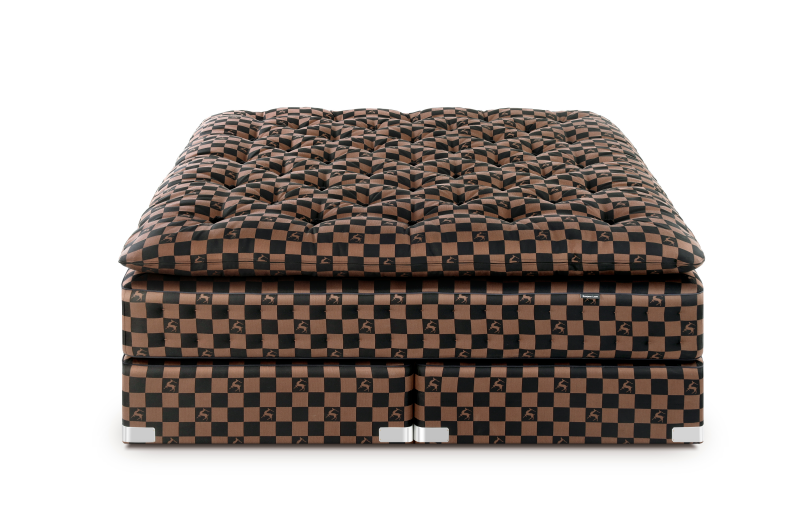
Hand-tufted rosettes depend on even load distribution. The fabric buttons (rosettes) stitched every 4–6 inches through all layers hold 6+ layers of natural filling in compression. When you sleep in the same spot every night, those tufts bear disproportionate load. Over months, some loosen while others compress excessively. Regular rotation distributes weight across the entire surface, keeping tuft stress even.
Synthetic mattresses arrive at peak performance on day one—foam compresses to its final shape within weeks, and your care has little influence on longevity. A hand-tufted natural mattress rewards your attention consistently.
What is Rotation Schedule: The Month-by-Month SOP?
Natural Settling Phase: Months 1–6
The first six months are the critical break-in window. Natural filling is adapting to your body shape, weight, and sleeping position—this is when the most pronounced fiber compression occurs.
Month 1–2: Rotate every 2 weeks, no flipping yet. Head-to-foot rotation only. The top surface is still settling—flipping it prematurely creates an uneven profile. Rotation redistributes pressure so no single zone bears full body weight for more than 2 weeks at a time. If two people of very different weights share the same mattress, a 2-week cycle becomes especially critical.
Month 3–6: Rotate every 2–4 weeks, add full flipping. The top surface has stabilized. Now flip the mattress so the bottom side—layers that have never been exposed to body heat and pressure—gets its turn to break in. Alternate the flip direction each quarter.
Maintenance Phase: Month 7 Onward
After natural settling is complete, switch to quarterly rotation. A typical household mattress bears approximately 2,500–3,000 hours of direct pressure per year. Quarterly rotation doubles the effective surface area absorbing that load.
Table 1: Rotation Schedule at a Glance
| Period | Action | Frequency | Direction |
|---|---|---|---|
| Months 1–2 | Head-to-foot rotation only | Every 2 weeks | Rotate 180° |
| Months 3–6 | Rotation + full flip | Every 2–4 weeks | Rotate 180°, then flip |
| Month 7 onward | Rotation + full flip | Quarterly | Alternate flip direction each quarter |
How to Rotate and Flip: Step-by-Step
- Remove all bedding and mattress protector.
- Stand at the foot of the bed and push the mattress toward the headboard until you can grip the bottom edge.
- Rotate 180 degrees (foot end to head end). For the flip step (months 3+): grip the rotated mattress and flip it over so the previously bottom side faces up.
- Check tufted rosettes after every flip. A rosette more than ¼ inch below surface level indicates loose filling—note it for monitoring.
- Replace bedding.
Factory tip: We place small corner labels on every mattress we produce—"A" and "B" designate each side. This eliminates guessing when you flip. Ask your supplier if they offer this, or add your own removable fabric tags.
What is the difference between Tuft Care, Inspection, and Repair?
What the Tufts Are and Why They Matter
Hand-tufted rosettes are spaced 4–6 inches apart across the entire surface. Each is hand-sewn through all layers and tied off underneath. The dimple you feel is intentional—it holds the filling in compression. A Queen-size mattress at our factory takes 3–6 hours of skilled labor to tuft. Protecting that craftsmanship with simple rotation is a direct and worthwhile investment.
Monthly Inspection Checklist
During your rotation, take 60 seconds to check every rosette:
- Normal: Rosette sits flush or slightly raised, no gap between fabric and button.
- Loose tuft: Button sinks more than ¼ inch below surface when pressed. The filling beneath has shifted.
- Protruding tuft: Button sits above surface; thread may be fraying or the backing has stretched.
DIY Re-Tightening a Loose Tuft
- Locate the loose top rosette and its corresponding tuft on the mattress underside.
- Thread a curved upholstery needle with heavy-duty thread; pass a new stitch through the bottom tuft loop while an assistant presses down on the top rosette.
- Pull gently to restore tension—do not over-compress the filling—then tie off with 3–4 square knots.
Do not use glue, staples, or duct tape. These damage natural fibers and void most warranties.
When to Call the Manufacturer Instead
Contact a professional when multiple tufts in a localized area are loose simultaneously (suggests seam failure), a tuft has detached completely, filling is protruding through the surface fabric, or the mattress is still under warranty—unauthorized repairs may void coverage.
At Bonjour Luxe, our after-sales team handles tuft repair inquiries throughout a mattress's service life, including factory-level refurbishment when needed—the value of sourcing from a manufacturer with established after-sales protocols, not a one-time transactional sale.
What Damages Tufts (And How to Avoid It)
- Jumping or standing on the mattress: Concentrated force can snap tuft threads.
- Bending the mattress edge: Creates stress at edge tufts. Always lift, never fold.
- Electric blankets on maximum setting: Prolonged direct heat degrades natural fiber resilience and tuft thread integrity.
- Twisting the mattress when removing it: Places asymmetric load on tufts.

What is the difference between Cleaning, Maintenance, and Longevity Optimization?
The No-Wet-Cleaning Rule
Natural mattresses should never be submerged, steam-cleaned, or heavily wet-scrubbed. Water disrupts the natural oils in wool and camel hair, and prolonged moisture in horsehair creates an ideal environment for mold. Our factory tests every mattress against moisture resistance standards, but that protection works best when you avoid saturating the surface.
Spot Cleaning (When Absolutely Necessary)
- Blot—do not rub—the stain with a clean, dry cloth.
- Dampen a cloth with cold water and a tiny amount of mild, fragrance-free soap; gently blot the stain.
- Follow immediately with a dry cloth, then allow to air dry completely—4–6 hours minimum—before remaking the bed.
Wool's Built-In Stain Resistance
Wool's lanolin coating naturally repels water-based stains. Most stains on a properly protected mattress are superficial—dust, skin cells, and body oils that a mattress protector prevents entirely. Wool can absorb up to 30% of its weight in moisture without feeling damp, which is why natural mattresses stay cooler in summer and warmer in winter. But this self-regulation only works if the fibers have airflow; a mattress that never rotates develops micro-climates where moisture accumulates, eventually affecting fiber resilience.
The Single Most Effective Accessory: A Quality Mattress Protector
Use a breathable, natural-fiber protector (cotton or TENCEL™). Avoid plastic covers—they trap moisture. Replace the protector every 2–3 years.
Quarterly Ventilation
Natural mattresses breathe better than foam, but benefit from occasional air exposure. In high-humidity regions (above 70% RH), use a room dehumidifier during monsoon seasons. Once a year, lift and tilt the mattress against the wall to air the underside. Open bedroom windows for 2–3 hours quarterly.
What to Never Do
| ❌ Never Do This | ✅ Do This Instead |
|---|---|
| Machine wash the mattress | Spot clean + protector |
| Expose to direct sunlight for hours | Air in shade or ventilated room |
| Vacuum with heavy rotary brush | Light upholstery attachment only |
| Store rolled or compressed | Store flat on a breathable foundation |
| Apply chemical stain removers | Mild soap + cold water only |
The Math Behind 20–30 Year Longevity
A well-maintained natural hand-tufted mattress earns its price tag over decades. A synthetic mattress replaced every 10 years at $2,000 each costs $4,000–$6,000 over 20 years. A hand-tufted natural mattress at $5,000 maintained for 25 years costs $200/year—and with proper care extending life by 30–50%, potentially $133/year over 30 years. Our factory data indicates that mattresses under consistent rotation protocols last an average of 8–12 years longer than identical models that received no rotation guidance.
Three Factors That Determine Whether Your Mattress Hits 25 Years
1. Foundation selection. A hand-tufted mattress needs a solid, flat foundation. Slatted frames with gaps wider than 3 inches create point-load stress that accelerates tuft loosening.
2. Consistent rotation. Without rotation, only the center of your sleeping zone absorbs every night's pressure. Quarterly rotation distributes load across the entire surface, preserving fill loft.
3. Professional refresh after 10–15 years. Some manufacturers, including Bonjour Luxe, offer a natural filling refresh—adding fresh horsehair or wool to restore loft without full replacement. Ask your supplier about this option before the mattress reaches its second decade.
Frequently Asked Questions
Q1: Can I use a mattress topper on my hand-tufted natural mattress?
Yes, and it may actually extend the mattress life by absorbing the first layer of body contact. Choose a natural-fiber topper (wool or cotton) rather than memory foam. Memory foam creates a heat barrier that reduces the natural breathability your mattress was designed for. A thin wool topper (1–2 inches) adds comfort while preserving airflow.
Q2: My mattress already has body impressions. Is it too late to fix them?
Not necessarily. If impressions are under 1 inch deep and the mattress is under 5 years old, a dedicated rotation protocol over 3–6 months often redistributes the filling enough to reduce visible impressions. For deeper impressions on older mattresses, contact your manufacturer—our factory has restored mattresses up to 8 years old by adding fresh filling through a side seam.
Q3: Is flipping really necessary if I rotate head-to-foot?
For the first 6 months: rotation alone is sufficient because the top surface is still adapting. After 6 months: yes, full flipping is recommended. The bottom layers have never been exposed to body heat and pressure—flipping allows them to break in evenly. Skipping the flip means only one side ages. Over time, you end up with a mattress that has two very different comfort profiles—neither comfortable nor ideal for longevity.
Care Is the Final Luxury
A hand-tufted natural mattress is an investment in daily wellbeing, not just sleep quality. The materials—horsehair, wool, silk, camel hair, alpaca wool, and organic cotton—are selected for their ability to last generations when given basic care.
That care takes less than 10 minutes every quarter. Rotate, flip, protect, and ventilate. It is not complicated. But it is the difference between a mattress that lasts 12 years and one that serves your family for 25.