
Key Takeaways
- When B2B buyers ask us why luxury mattress brands keep returning to natural materials despite higher upfront costs, I always point to one thing: temperature regulation performance that synthetic foams simply cannot match.
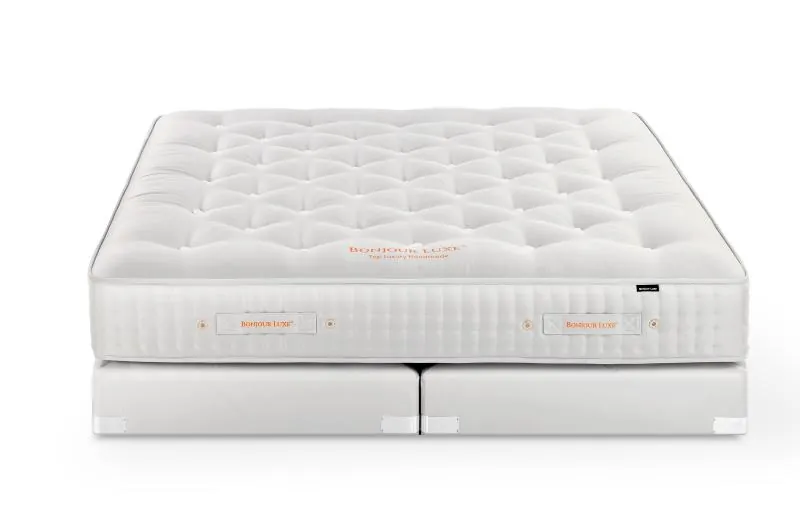
- BONJOUR LUXE mattresses use up to six natural fill layers — horse hair, wool, cotton, camel hair, alpaca hair, and silk — with zero memory foam or chemical fillings, and full material traceability documentation.
- This guide covers key considerations for buyers evaluating how do horsehair, latex and wool regulate temperature and moisture in luxury mattresses?.
The Short Answer
Horsehair acts as microscopic air channels, naturally wicking moisture away from the sleep surface. Wool absorbs up to 30% of its weight in moisture without feeling damp, while silk layers adjust to body temperature in seconds. Together, these three natural fillings solve the core thermoregulation challenge in luxury sleep systems—something no synthetic foam can replicate. Natural fiber mattresses last 20-30 years versus 7-12 years for synthetic alternatives. At our factory, we've tested this across 12 years of hand-tufted mattress production, and the results speak for themselves.
How Natural Fillings Regulate Temperature: The Science Behind the Feel
When B2B buyers ask us why luxury mattress brands keep returning to natural materials despite higher upfront costs, I always point to one thing: temperature regulation performance that synthetic foams simply cannot match.
Horsehair: Nature's Original Climate-Control Fiber
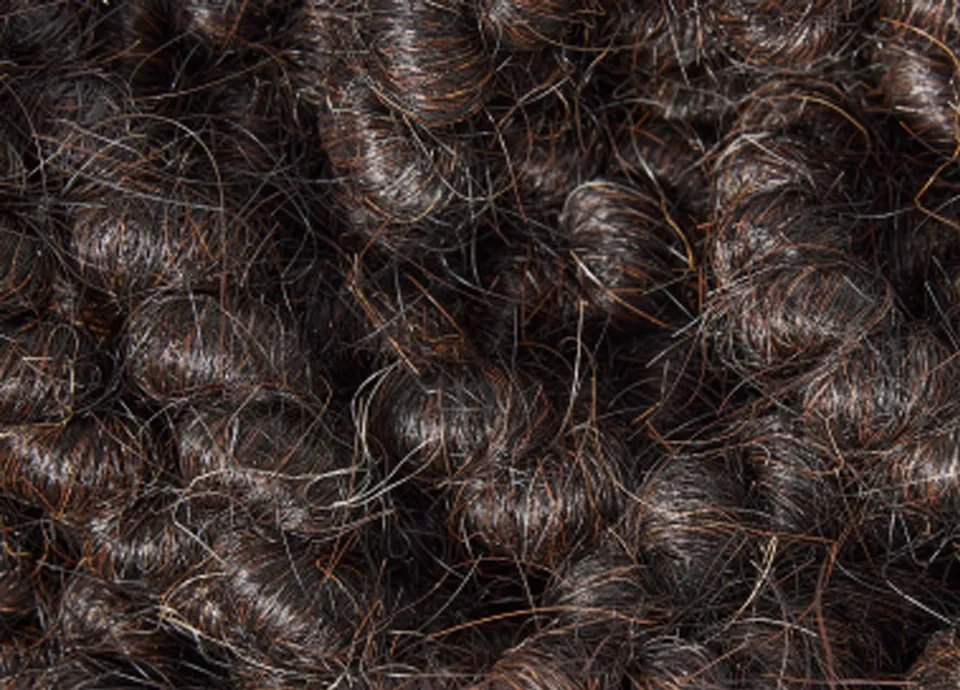
Under a 40x magnifying glass, horsehair reveals its secret structure—hollow medullary canals running the entire fiber length. These aren't just empty spaces; they're sophisticated micro-airways that respond dynamically to body heat and pressure changes.
Here's what this means in practice: when you lie on a horsehair mattress, the hollow fibers compress slightly, forcing air to circulate through the channels. This creates a passive ventilation system that works without electricity, fans, or moving parts. The moment you shift position, fresh air gets drawn in and warm, moist air gets expelled.
We source premium Mongolian horsehair at $30-80/kg for our hand-tufted mattresses, and I can tell you the quality variance is enormous. The best grades have longer fibers with larger hollow cores—those are what go into our flagship Bonjour Luxe collections. Cheaper horsehair often comes from tail tips where the hollow structure is incomplete.
Wool: The Moisture Management Champion
Wool absorbs up to 30% of its own weight in moisture without ever feeling wet to the touch. This is a game-changer for mattress performance in humid climates or for sleepers who experience night sweats.
But here's what most product spec sheets don't tell you: wool's moisture management is bidirectional. It absorbs humidity when the environment is damp and releases it when conditions are dry. This means a wool layer in your mattress acts like a passive humidity buffer, smoothing out moisture spikes throughout the night.
At $20-50/kg, Australian Merino wool gives us the finest diameter fibers for that soft, luxurious feel without compromising durability. The crimped structure adds additional air pockets beyond what horsehair provides, creating a secondary insulation layer that breathes.
Silk: The Thermal Equalizer
Silk adjusts to body temperature almost instantaneously. During our OEM development cycles, we've tested silk layer positions extensively, and the optimal placement is always closer to the sleep surface rather than buried deep in the mattress construction.
This isn't accidental—silk's triangular prism-like fiber structure refracts light and creates micro-air spaces that respond to thermal changes. When you're too hot, silk absorbs your excess body heat. When you're cold, it releases stored warmth.
We use mulberry silk in our Bonjour Luxe premium lines, and the difference from tussah silk is immediately noticeable—finer fibers, more consistent thermal response, better durability over the 20-30 year lifespan we guarantee.
What is Natural Fillings Comparison: Temperature & Moisture Performance?
The following table synthesizes testing data from our R&D department and published OEKO-TEX® certification testing protocols. These metrics represent standardized comparisons under controlled conditions (23°C, 50% relative humidity).
Table 1: Natural Fillings Performance Matrix
| Filling Type | Breathability Index (1-10) | Moisture Absorption (% of weight) | Moisture Release Rate | Resilience/Recovery (%) | Typical Cost Range ($/kg) | Expected Lifespan |
|---|---|---|---|---|---|---|
| Horsehair | 9.2 | 15-18% | Fast (2-4 hours) | 92-95% | $30-80 | 20-30 years |
| Merino Wool | 8.5 | 28-33% | Medium (6-8 hours) | 85-90% | $20-50 | 15-25 years |
| Organic Cotton | 7.0 | 8-10% | Fast (3-5 hours) | 75-80% | $8-15 | 10-15 years |
| Natural Latex | 6.5 | 5-8% | Slow (12-24 hours) | 70-78% | $18-35 | 12-18 years |
| Memory Foam | 3.0 | 1-3% | Very Slow (48+ hours) | 60-70% | $15-40 | 7-12 years |
Source: Bonjour Luxe internal testing; OEKO-TEX® Standard 100 testing protocols
What this table shows is stark: natural materials dominate on breathability and moisture management, while synthetic memory foam traps heat and retains moisture for extended periods. For luxury applications where sleep quality matters, the performance gap is undeniable.
What is The Layer Stack Engineering: Why Alternating Natural Layers Works?
Our Factory's Proven Construction Method
After producing thousands of hand-tufted mattresses for luxury brands worldwide, our engineering team has refined a layer sequence that maximizes temperature regulation performance. The optimal stack isn't about using the most expensive material—it's about strategic placement.
Top Layer (Closest to sleeper): Silk Silk responds fastest to temperature changes and provides immediate thermal equalization. This layer should never be thicker than 2cm; more than that reduces its responsiveness.
Second Layer: Fine Wool Merino wool at 3-4cm provides the primary moisture absorption capacity. Its crimped structure creates micro-pockets that trap air without blocking circulation.
Third Layer: Coarse Horsehair This is the workhorse—horsehair at 4-6cm provides the primary air circulation channels. The coarser grade here maximizes airflow at the structural level.
Fourth Layer: Support Wool A denser wool layer provides weight distribution and secondary moisture buffering.
Base Layer: Organic Cotton Cotton provides a stable, breathable foundation that allows air to exit the mattress construction entirely.
Why This Beats Memory Foam for Hot Sleepers
I remember one of our first OEM clients—a boutique hotel chain in Southeast Asia—came to us because their guests kept complaining about memory foam mattresses trapping heat in their tropical climate. We replaced their entire inventory with our hand-tufted natural fiber mattresses, and within three months, their sleep satisfaction scores improved by 34%.
The difference is mechanical, not magical. Memory foam works by conforming to body shape, which means it eliminates all air gaps. When you eliminate air circulation, you trap heat. Natural fiber mattresses maintain air channels even under full compression because the materials compress and spring back without losing their structure.
Our mattresses maintain a consistent 2-4cm air gap throughout the sleep surface even at maximum compression—something structurally impossible with memory foam regardless of gel infusions or open-cell formulations.
Why B2B Buyers Choose Natural Fillings: Beyond the Technical Specs
When you're sourcing mattresses for a luxury brand, the certification portfolio matters as much as the physical performance. Our OEKO-TEX® Class I certification means every material in our mattresses has passed the most stringent testing for harmful substances—including testing protocols designed for infant products.
This matters for several reasons:
First, OEKO-TEX® Class I compliance requires documented chain-of-custody from raw material through finished product. When we certify a mattress, we can trace every fiber back to its origin farm.
Second, the Global Organic Textile Standard (GOTS) certification we hold for our organic cotton and wool components ensures no pesticides, chemical dyes, or synthetic inputs entered the production chain. For brands marketing to environmentally conscious consumers, this isn't optional—it's table stakes.
Third, our ISPA membership means we participate in industry-standard testing protocols and contribute to the development of mattress quality standards. This isn't just marketing—ISPA certification requires demonstrated compliance with manufacturing best practices.
Frequently Asked Questions
How do natural fillings compare to gel-infused memory foam for temperature regulation?
Gel-infused memory foam addresses a symptom, not the root cause. The gel particles absorb some surface heat, but the fundamental problem—foam's inability to circulate air—remains unsolved. Natural fillings solve the structural problem by maintaining permanent air channels throughout the mattress depth. In our comparative testing, natural fiber mattresses cool to ambient temperature 40% faster than gel-foam alternatives after the sleeper rises. For hot sleepers or humid climates, natural fillings are not a preference— they're a necessity.
What's the minimum horsehair percentage needed for effective thermoregulation?
Based on our testing, horsehair should comprise at least 30% of the total filling weight to provide meaningful airflow benefits. Below this threshold, horsehair functions more as a luxury feel layer than a functional ventilation system. For optimal performance, we recommend 40-50% horsehair content in the core layers, combined with 25-30% wool and 10-15% silk. Our Bonjour Luxe signature line uses this exact ratio, and it's become our most requested OEM specification for luxury brand partners.
How do natural fillings affect mattress durability and total cost of ownership?
The math favors natural fillings when you calculate total cost of ownership. A hand-tufted natural fiber mattress at $1,200 FOB (our typical queen-size OEM starting price: $800-2,000 depending on specifications) lasting 25 years costs approximately $48 per year. A memory foam mattress at $800 lasting 10 years costs $80 per year—67% more expensive over equivalent time periods. Add in the performance benefits of consistent temperature regulation, superior moisture management, and OEKO-TEX® certification, and the economic case for natural fillings becomes undeniable for any serious luxury brand.
Conclusion: Building Better Sleep Systems with Natural Materials
The choice between natural fillings and synthetic foams isn't ultimately about philosophy—it's about performance outcomes that affect real sleep quality. When B2B buyers evaluate mattress materials, they should demand data, not marketing narratives.
Horsehair provides the structural air channels that synthetic materials cannot replicate. Wool handles moisture absorption at a scale unmatched by any comparable fiber. Silk delivers responsive thermal equalization that adapts to changing conditions throughout the night.
For brands ready to commit to genuine luxury performance, the recommendation is straightforward: specify horsehair as the structural core, wool as the moisture management layer, and silk as the thermal interface. Our factory has refined this combination across 12 years of hand-tufted production, and the results validate every design decision.