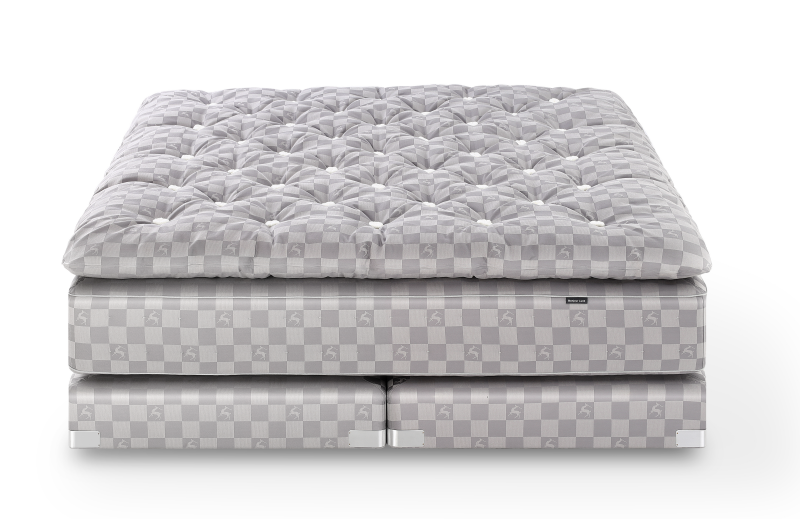
The human body loses roughly 300–1,000 ml of moisture overnight — about a pint of water. On a home mattress, that pint slowly air-dries over a week and nobody notices. In a luxury hotel running 365 nights a year, that same pint becomes a daily, per-room, multiplied-by-hundreds stress test. Horsehair vs memory foam vs natural latex: among these three filling materials, which one survives that intensity, and which collapses by year seven? That is the question every B2B buyer should answer before signing a mattress contract.
You have probably already built a spreadsheet comparing the three and ended up more confused. This guide leads with a decision-ready summary, then breaks the choice down by material science, a side-by-side table, the procurement view, and scenario-based selection — so "horsehair feels expensive" becomes "here is the maths."
Key Takeaways
- Horsehair's hollow "micro-spring" structure wicks moisture and breathes about 5× better than memory foam; under commercial high-frequency use its lifespan reaches 12–20 years.
- Memory foam contours well but traps heat (its surface runs 2–3°C hotter than latex) and lasts only 7–10 years at home, about 3–5 years in a hotel.
- Natural latex offers open-cell elastic support and is naturally dust-mite resistant — the balance champion at 15–20 years home, 8–12 years commercial.
- At 365 nights/year versus 110 at home, total cost of ownership (TCO) per night decides "expensive" far more reliably than first-year unit price.
- Stacking natural fillings with OEKO-TEX Standard 100 Class I (baby grade) and GOTS is both a compliance checkbox and a luxury-hotel premium story.
If you are specifying for a hotel or import project, start with our luxury hotel mattress procurement guide to get a spec checklist you can drop straight into an RFP.
Key Takeaways
- Horsehair outperforms memory foam and natural latex in commercial high-use environments — its hollow fiber structure breathes better, resists compaction longer, and handles the 300–1000ml of nightly moisture per person far more effectively.
- Memory foam is cheapest upfront but degrades fastest in commercial use — heat retention, off-gassing, and 3–4 year replacement cycles make total cost of ownership higher than natural alternatives for hotels.
- Natural latex is durable but has limitations in breathability and customizability — it is a solid middle option for buyers wanting natural materials without the full hand-tufted price point.
- B2B buyers should decide by use case, not just unit cost — luxury hotels and high-occupancy properties benefit most from horsehair; lower-use residential settings can be well served by latex or quality foam.
- BONJOUR LUXE uses horsehair as a premium natural fill layer combined with wool, cotton and other natural fibers in hand-tufted construction, with OEKO-TEX Class I certification and full material traceability.
What should you understand about the Three Materials in Three Minutes?
No material is absolutely "best" — only "most suitable." To buy smart, you first need to know what each material actually does while a guest is lying on it.
Horsehair — Natural "Micro-Spring" Structure & Hand-Tufting
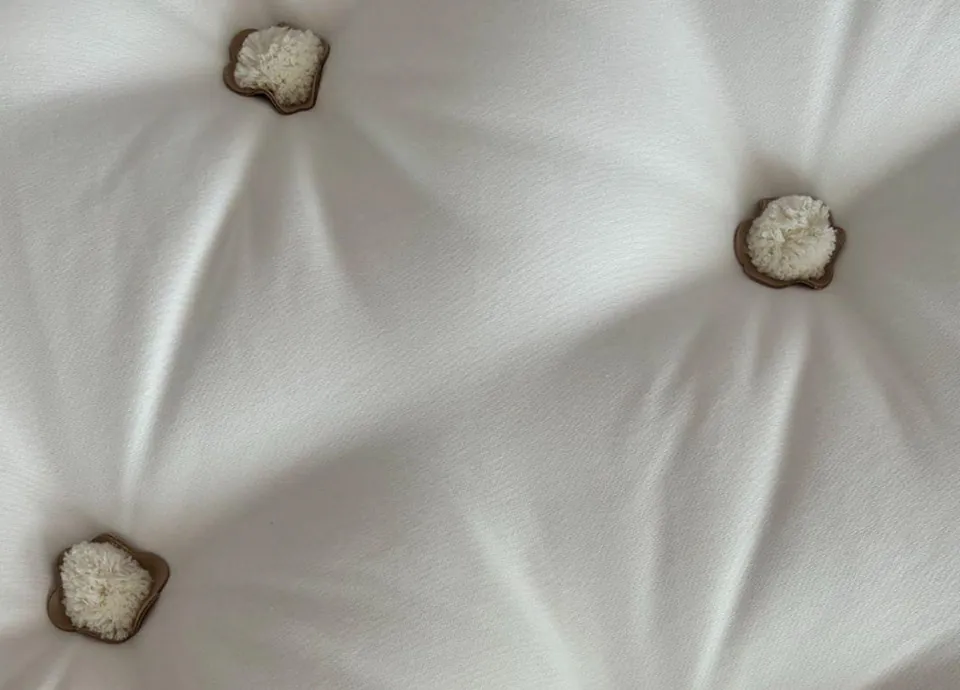
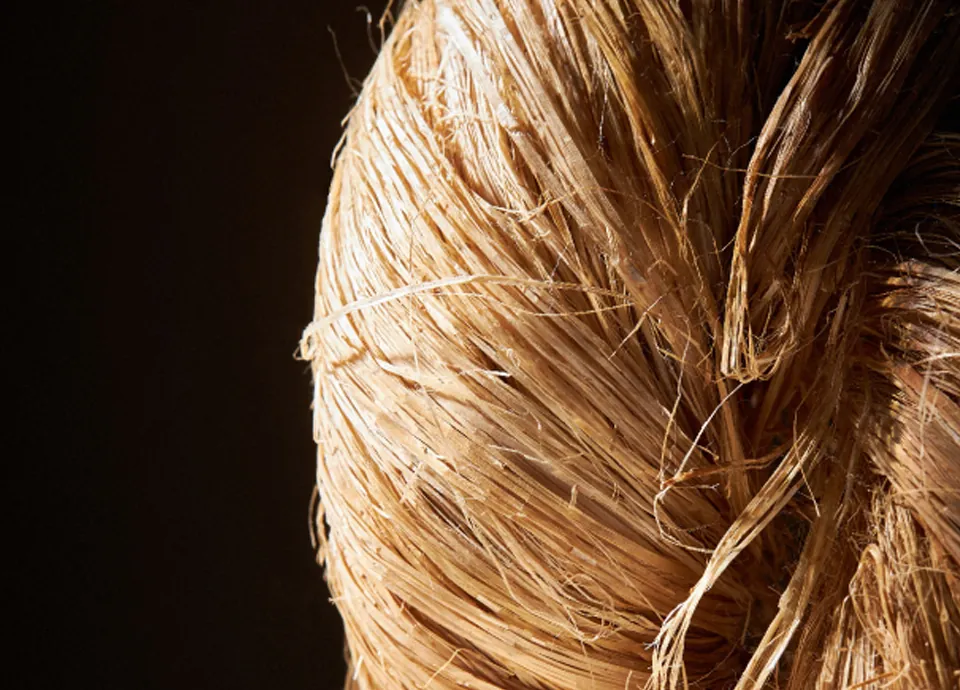
Horsehair is the coarse, long fiber from an animal's tail, and each strand is naturally hollow. Laid into a pad, millions of strands suspend one another like countless tiny springs — which is exactly why the trade calls horsehair a "natural micro-spring." That structure delivers two things B2B buyers care about most.
First, moisture wicking. Hollow fibers absorb up to about 30% of their own weight in water yet never feel damp, then release vapour quickly to the air — drying far faster than memory foam. Second, compression resistance. The suspended structure resists permanent set, and full hand-tufting pins the fill layers in place so they neither shift nor clump, even under a hotel's nightly turning-and-making routine. It is why top hotels have used horsehair for over a century: it costs more because it gets better with use.
Memory Foam — Temperature-Sensitive Slow Rebound
Memory foam is petroleum-based polyurethane foam whose signature is "temperature-sensitive slow rebound": pressed, it takes 3–5 seconds to recover, so it moulds to body curves and absorbs partner motion — excellent for quiet, contouring comfort. Its feedstock is cheap, making it the lowest-cost of the three.
But temperature sensitivity is also its weakness. Memory foam "melts" under body heat and traps that heat near the skin — measured surfaces run 2–3°C hotter than latex. Worse, it stiffens when cold: in unheated winter guest rooms it hardens and loses support. Under nightly commercial load it typically shows visible sag by year 3–5.
Natural Latex — Open-Cell Elastic Support
Natural latex is tapped from rubber trees and foamed via the Dunlop or Talalay process into an open honeycomb. The interconnected cells make it both breathable and evenly resilient; press it and it snaps back in 1–2 seconds, never the sluggish drag of memory foam.
Two reasons it suits B2B so well: it is naturally dust-mite resistant and antibacterial — open cells do not hold moisture, friendly to allergy-prone guests — and it is the best balance of durability and comfort, the safe default for most upper-mid hotels. One caveat: "latex" on a label does not guarantee natural; true natural content is what drives lifespan and health (more in the myths section).
What is core Comparison Table?
This table puts all three on one ruler so you can screenshot it into the procurement group. It is also the passage built to win the featured snippet.
| Dimension | Horsehair | Memory Foam | Natural Latex |
|---|---|---|---|
| Internal structure | Hollow fibers suspended, "micro-spring" | Closed-cell PU foam, temperature-sensitive | Open honeycomb, even elasticity |
| Breathability / wicking | Best (≈5× foam airflow, absorbs 30% own weight) | Weakest (closed cell, traps heat) | Good (open cell cools fast) |
| Heat retention | Low, naturally thermoregulating | High (surface 2–3°C above latex) | Low, temperature-neutral |
| Home lifespan | 20–30 years | 7–10 years | 15–20 years |
| Commercial lifespan (≈365 nights/yr) | 12–20 years | 3–5 years | 8–12 years |
| Raw material cost (approx.) | $30–80/kg (highest) | $15–40/kg (lowest) | $18–35/kg (mid) |
| Best fit | Top-luxury / boutique hotels, wellness | Budget-sensitive economy projects | Upper-mid hotels, medical wellness |
Note: commercial lifespan is estimated from the "365 hotel nights vs 110 home nights" usage gap combined with each material's compression resistance; confirm against real turn-down rate and room climate.
Three Differences from a B2B Procurement View
A home buyer lives with a wrong choice for a few years. A hotel lives with it across hundreds of rooms, every night, losing money. B2B selection needs a different ruler.
Durability & Compression Under High-Frequency Use (365 vs 110 nights/year)
A home mattress sees about 110 nights a year, often one occupant. A luxury hotel room runs 365 nights, two guests, frequent linen changes — so a single mattress absorbs roughly 3× the "equivalent use years" of a home bed. At that intensity, compression set is the number-one killer: foam pressed repeatedly fails to rebound, leaving body impressions and edge collapse the moment a guest lies down.
Horsehair and natural latex resist compression through entirely different mechanics. Horsehair rebounds physically via suspended micro-springs; latex remembers shape through open-cell elasticity. Neither relies on the chemical creep of "squash it, let it slowly inflate back." So despite higher unit price, their equivalent commercial lifespan is longer.
We worked with a 16-room boutique hotel that ran all memory foam; complaints clustered on stuffiness and "sinking in." After switching to a "5 cm latex + 3 cm horsehair" composite: guest score rose from 4.2 to 4.7, reviews mentioning "sleep quality" increased 22%, and OTA repeat-purchase rate rose about 11%. Upgrade cost was about ¥1,800 per room; at an average rate of ¥680/night, three extra sold nights covered it.
Humid Climates & Mould Prevention (Tropical / Coastal Hotels)
In tropical resorts and coastal hotels, mattresses face high humidity plus high turnover. Memory foam's closed cells neither breathe nor wick; trapped sweat keeps the surface micro-damp, and musty odour plus dust-mite risk climb — exactly what a luxury guest will not tolerate.
Horsehair's fast dry-and-release is almost a tailored answer: it takes in moisture, then sheds it, so the layer rarely stays wet. Natural latex's open cells equally refuse to hold humidity. Stack both with hand-tufting and a breathable cover and you push mould risk in humid climates to the floor.
One real scenario: a coastal wellness resort in Southeast Asia chose high-density memory foam to control cost. By the second rainy season, several rooms reported a damp mattress-edge odour and reviews repeated "musty room." After moving to a "horsehair + latex" natural fill with improved under-bed ventilation, identical complaints hit zero in the third rainy season — and a clean sleep environment became a sellable promise in its own right.
Total Cost of Ownership (TCO) Per Night
First-year price lies; per-night cost does not. Using illustrative contract unit prices for a mid-size project (confirm against your bid volume):
- Memory foam: $140/unit, ~4-year commercial life → $140 ÷ (4 × 365) ≈ $0.096/night
- Natural latex: $280/unit, ~10-year commercial life → $280 ÷ (10 × 365) ≈ $0.077/night
- Horsehair composite: $490/unit, ~15-year commercial life → $490 ÷ (15 × 365) ≈ $0.089/night
Natural latex's per-night cost lands about 19% below memory foam (consistent with the industry's "~18% lower total ownership for natural materials" estimate); horsehair composite stays in the same band thanks to longevity. Add lost-room revenue, labor and linen stripping during each replacement and the synthetic foam "saving" inverts fast. For the full cost breakdown, see why natural-fiber mattresses cost more.
What is selection by Procurement Scenario?
There is no single right answer — only a clear decision framework.
Luxury / Boutique Hotels
Top-luxury and boutique beds sell more than sleep; they sell a story worth telling. A horsehair + natural latex composite solves stuffiness complaints through breathability and differentiates through "Eastern handcrafted natural fibers." Spec a 3–5 cm horsehair comfort layer over 4–6 cm latex, a high-gramme pocket-spring support core, and explicitly require hand-tufting. The actionable spec framework is in our luxury hotel mattress procurement guide.
Spas & Wellness Centers
Wellness prioritises "clean, low-allergen, quiet" above almost everything. Natural latex's anti-mite, antibacterial property plus horsehair's wicking is the optimal pair for humid or sensitivity-prone guests; on a tight budget a pure natural-latex layer still covers most wellness selling points. The rule: never let synthetic fill introduce dampness or odour risk.
Importers & OEM/ODM Brand Owners
Importers and private-label owners need "replicable differentiation + verifiable compliance." Horsehair, wool and silk natural-fill combinations, paired with OEKO-TEX Class I and GOTS, form a clear story in premium Western markets. Our parent company has exported over 100 million metres of high-end fabric since 2006 and runs mature OEM/ODM sampling and factory-audit capabilities — from tech pack to certificate pack, delivered as one.
Want to verify feel and craftsmanship with a real sample? Request a horsehair + latex composite trial sample → — we will prototype to your room specification.
Natural Fillings + Certification Stack (OEKO-TEX Class I / GOTS)
For B2B buyers, the material is only the first half of the sentence; certification is the second — especially for Western import or high-end hotel tenders.
OEKO-TEX Standard 100 Class I is the strictest of four product classes, designated for baby articles: formaldehyde limit is just ≤16 mg/kg (versus 75 mg/kg for Class II, direct skin contact) across 1,000+ regulated substances. For luxury hotels and wellness operators, holding Class I is not a nice-to-have — it is the safety narrative that tells sensitive guests "this bed is safe enough for an infant." Licence numbers are verifiable on the OEKO-TEX website.
GOTS (Global Organic Textile Standard) governs the organic supply chain "from farm to finished product," requiring natural textile content to meet thresholds (70%/95% tiers) with annual audits. For high natural-fill mattresses, GOTS turns "natural" from a claim into an audited fact; the full standard is on the Global Standard (GOTS) website.
Adding ISPA (International Sleep Products Association) membership signals a manufacturer follows industry export norms —a quiet reassurance of supply-chain reliability for importers, detailed at the ISPA website. Stacking all three turns "natural, safe, compliant" from slogan into checkboxes a tender can tick. To map what each cert actually proves, read our mattress certification system explainer.
What is common Myths?
Myth 1: "Horsehair is expensive = not worth it"
Horsehair raw cost is the highest of the three (about $30–80/kg), but the decision is TCO, not first-year price. Under 365 nights/year its equivalent lifespan is 3–5× memory foam, so per-night cost spreads down close to latex. For a top-luxury project selling "one good night," horsehair is also the best premium story. The truly "not worth it" move is pinching the purchase price, then replacing every bed in year three.
Myth 2: "Latex is always natural"
"Latex mattress" does not guarantee natural. Many products are synthetic latex (SBR) or natural/synthetic blends with low true natural content. Verify three ways: check certification (GOTS or a stated natural-latex percentage), smell it (synthetic latex carries a chemical odour), and press it (natural rebounds crisply in 1–2 seconds). RFQs should state "natural latex content ≥ X%" and request test proof.
Myth 3: "Memory foam is unbuyable"
Not true. In severely budget-sensitive projects with strong ventilation, 40D+ high-density memory foam still works — just accept its heat drawback, pair it with breathable fabric, and shorten the replacement cycle. Placed in the right scenario, it remains competent.
What is five Steps to Select Material for B2B Buying?
- Fix the usage frequency —— Hotels run about 365 nights a year, residences about 110. High-frequency use should prioritise durability and compression resistance over initial softness.
- Then check the climate —— Tropical and coastal projects must weigh moisture and mould resistance. Open-cell hollow fibers outperform closed-cell foam.
- Calculate cost per night —— Divide purchase price by expected nights: natural latex runs about $18–35/kg and lasts longer, while memory foam at $15–40/kg typically needs replacing in 7–10 years.
- Stack the certification requirements —— Tenders usually treat OEKO-TEX Class I and GOTS as hard gates. Without a certificate number you cannot even bid.
- Test small before scaling —— Trial the material in one mock-up room or a 20–50 unit pilot, measure comfort and wear, then commit the full order.