
Key Takeaways
- Material type: Memory foam, latex, polyurethane, or hybrid blends.
- Density: Measured in kilograms per cubic meter (kg/m³).
- Thickness: In millimeters or centimeters
- ILD (Indentation Load Deflection): Softness or firmness rating.
- Certifications: CertiPUR-US, OEKO-TEX, or GOTS for natural materials.
Layer 1 — Fiber Stack Specification
The fiber stack sits above the spring unit and determines the comfort profile. This is where you specify the materials, densities, and thicknesses that create your mattress feel.
Request these details for each foam layer:
- Material type: Memory foam, latex, polyurethane, or hybrid blends
- Density: Measured in kilograms per cubic meter (kg/m³)
- Thickness: In millimeters or centimeters
- ILD (Indentation Load Deflection): Softness or firmness rating
- Certifications: CertiPUR-US, OEKO-TEX, or GOTS for natural materials
Higher density foams last longer but cost more. A 30 kg/m³ memory foam layer will bottom out faster than a 50 kg/m³ layer. Compare the actual density specifications, not just the layer names.
For natural fiber options, request:
- Coir density and thickness
- Wool blend percentage and weight in g/m²
- Cotton batting weight and source
[Source: OEKO-TEX.com — OEKO-TEX Standard 100 Product Safety Testing]
Layer 2 — Spring System
The spring unit provides support and durability. Specify the configuration that matches your target market.
Data Point: Spring System Specification Ranges
Specification Entry-Level Range Mid-Range Premium Range Impact Pocket Count (queen) 600–800 800–1,200 1,500–3,000+ Contouring, motion isolation Wire Gauge (mm) 2.0–2.4 1.6–2.0 1.2–1.6 Firmness, support feel Zoning None 3-zone 5-zone Targeted body support Unit Height (mm) 120–150 150–200 200–250 Mattress profile, feel Source: bonjourluxe Content Team, based on China's mattress belt analysis, 2025–2026
| Specification | Description | Impact on Sleep |
|---|---|---|
| Pocket Count | Number of individual springs per unit | Higher counts = better contouring |
| Wire Gauge | Thickness of spring wire in mm | Lower gauge = firmer support |
| Zoning | Variable firmness across mattress surface | Targeted support for shoulders/hips |
| Unit Height | Overall spring unit height in mm | Affects mattress profile and feel |
Pocket counts typically range from 800 to 3000+ in queen size. Higher counts improve motion isolation and body contouring but increase material cost.
Wire gauge ranges from 1.2 mm (softer) to 2.4 mm (very firm). Most quality mattresses use 1.6 mm to 2.0 mm wire.
Zoning creates variable support zones, typically three or five zones. The hip zone uses firmer springs to prevent sink, while the shoulder zone uses softer springs for pressure relief.
Request the exact pocket count, wire gauge, and zoning configuration in your specifications. A factory that cannot provide these details may be using lower-quality spring units.
[Source: OEKO-TEX.com — OEKO-TEX Standard 100 Product Safety Testing]
Layer 3 — Firmness Mapping
Firmness defines how the mattress responds to body weight and sleeping position. Choose the mapping that fits your target customer.
Single Firmness: One consistent feel across the entire mattress surface. Simplest to produce and explain to customers. Works well for dedicated back or side sleepers.
Dual Split: Different firmness levels on each side of the mattress. Allows partners with different preferences to share the same mattress. Specify the split point and the firmness level for each side.
Five-Zone Support: Variable firmness across five zones from head to foot. Typically softer at shoulders and legs, firmer at hips and lumbar. Creates anatomically aligned support for combination sleepers.
Data Point: ILD vs Firmness — Practical Ranges
ILD Rating Feel Description Typical Use 10–14 ILD Very soft Plush comfort layers, pressure relief 14–20 ILD Soft to medium Comfort layers in luxury mattresses 20–30 ILD Medium to firm Support layers, firm comfort 30–40 ILD Firm Firm support layer 40–50 ILD Very firm Extra-firm base or orthopaedic Source: bonjourluxe Content Team, based on China's mattress belt analysis, 2025–2026
Request ILD ratings for each zone or side. ILD typically ranges from 10 (very soft) to 50 (very firm). A comfort layer at ILD 12 will feel much different from one at ILD 18.
[Source: OEKO-TEX.com — OEKO-TEX Standard 100 Product Safety Testing]
Layer 4 — Size Customization
Match your target market's size standards. Mattress dimensions vary significantly across regions.
Data Point: Standard Mattress Size Dimensions
Size US Dimensions Metric Dimensions Primary Market Twin 38" × 75" 99 × 191 cm North America Twin XL 38" × 80" 99 × 203 cm North America Full 54" × 75" 137 × 191 cm North America Queen 60" × 80" 152 × 203 cm North America, Asia King 76" × 80" 193 × 203 cm North America California King 72" × 84" 183 × 213 cm North America EU Single — 90 × 200 cm Europe EU Double — 140 × 200 cm Europe EU Queen — 160 × 200 cm Europe EU King — 180 × 200 cm Europe EU Super King — 200 × 200 cm Europe Source: bonjourluxe Content Team, based on China's mattress belt analysis, 2025–2026
US Standard Sizes:
- Twin: 38" × 75" (99 × 191 cm)
- Twin XL: 38" × 80" (99 × 203 cm)
- Full: 54" × 75" (137 × 191 cm)
- Queen: 60" × 80" (152 × 203 cm)
- King: 76" × 80" (193 × 203 cm)
- California King: 72" × 84" (183 × 213 cm)
EU Standard Sizes:
- Single: 90 × 200 cm
- Double: 140 × 200 cm
- Queen: 160 × 200 cm
- King: 180 × 200 cm
- Super King: 200 × 200 cm
Non-Standard Sizes: Custom dimensions for specialty applications, RV mattresses, boat mattresses, or custom furniture. Provide exact dimensions in both centimeters and inches.
Confirm the factory's capability for non-standard sizes. Some factories have minimum quantity requirements or additional setup charges for custom dimensions.
[Source: OEKO-TEX.com — OEKO-TEX Standard 100 Product Safety Testing]
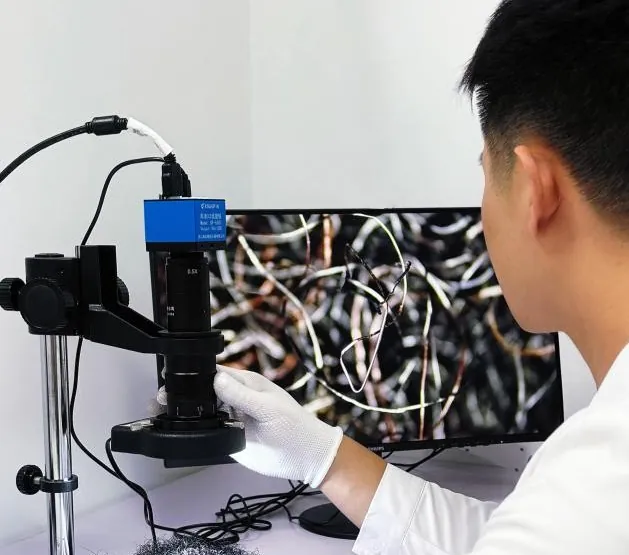
Layer 5 — Tick Fabric
The tick fabric is the outer cover that encases the mattress. Material choice affects breathability, feel, and price positioning.
| Material | Weight | Feel | Price Positioning |
|---|---|---|---|
| GOTS Organic Cotton | 200–300 g/m² | Soft, breathable, natural | Premium |
| Belgian Linen | 180–250 g/m² | Crisp, cool, durable | Luxury |
| Silk Blend | 150–220 g/m² | Smooth, temperature-regulating | Ultra-premium |
| Bamboo Viscose | 180–260 g/m² | Silky, moisture-wicking | Mid-premium |
| Polyester Blend | 150–200 g/m² | Durable, affordable | Standard |
Request the fabric weight in g/m² and the material composition percentage. A "cotton blend" might contain only 30% cotton.
For premium positioning, request:
- GOTS certification for organic cotton
- OEKO-TEX Standard 100 for chemical safety
- Belgian linen origin documentation
- Silk percentage in silk blends
The tick fabric is a visible differentiator. Customers can see and feel the difference between a 180 g/m² polyester blend and a 280 g/m² organic cotton cover.
[Source: GOTS.org — Global Organic Textile Standard] [Source: OEKO-TEX.com — OEKO-TEX Standard 100 Product Safety Testing]
The Layer Transparency Differentiator
A factory that provides complete layer specifications demonstrates manufacturing competence. Request a layer diagram showing:
- Each material layer from top to bottom
- Thickness of each layer in millimeters
- Material type and density
- Functional purpose of each layer
Compare layer diagrams across multiple suppliers. Inconsistencies in quoted specifications often reveal where corners are cut.
A factory that cannot specify foam density, spring pocket count, or fabric weight may be purchasing materials from multiple untraceable sources. This creates quality inconsistency between production runs.
Demand transparency before you commit to production. The specifications you approve become the baseline for quality control.
[Source: OEKO-TEX.com — OEKO-TEX Standard 100 Product Safety Testing]
Frequently Asked Questions
What's the minimum density I should accept for memory foam?
For durability, look for at least 40 kg/m³ density in memory foam comfort layers. Lower densities will show body impressions within 1 to 2 years. Support layers can use 30 kg/m³ polyurethane foam, but comfort layers benefit from higher density.
How many pocket springs do I need for a good mattress?
It depends on your target market. For mainstream retail, 800 to 1200 pockets in queen size provides good support. For premium positioning, 1500 to 2000+ pockets improves contouring and motion isolation. Beyond 2000 pockets, the comfort improvement diminishes.
What's the difference between ILD and firmness?
ILD is a technical measurement of force required to indent the foam 25%. Lower ILD numbers indicate softer foam. Firmness is a subjective perception that combines ILD with layer thickness and material type. A 3-inch layer at ILD 15 feels softer than a 1-inch layer at the same ILD.
Should I choose organic cotton or Belgian linen for the tick?
Choose based on your market positioning. Organic cotton appeals to eco-conscious consumers and carries GOTS certification. Belgian linen offers a crisp, cool feel associated with luxury hotels. Both are premium options. Request samples of each to compare the hand feel.
Can I request different firmness levels for each side of the mattress?
Yes. Dual-split firmness is common for couples with different preferences. Specify the split point (typically center) and the ILD or firmness level for each side. Some factories offer different comfort layers on each side rather than different spring units.
[Source: OEKO-TEX.com — OEKO-TEX Standard 100 Product Safety Testing] [Source: GOTS.org — Global Organic Textile Standard]
The foam density number tells you more about durability than any marketing claim. A 30 kg/m³ layer will bottom out years before a 50 kg/m³ layer. Custom Layers
Request the exact pocket count and wire gauge. A factory that cannot provide these specifications may be sourcing springs from multiple suppliers with inconsistent quality. Custom Layers
The tick fabric is the only layer your customer can see and touch. A 280 g/m² organic cotton cover communicates premium quality before the customer lies down. Custom Layers
**** Bonjour Luxe's standard layer specification sheet includes fiber stack materials and densities, spring system pocket count and wire gauge, firmness mapping ILD ratings, and tick fabric weight and composition. Confirm that specification sheets are provided to buyers before production sampling.
Related: Firmness Scale | Materials Guide | Spring Systems